QR Codes Died in 2015. Here's Why 2026 Is Different.
I was sitting at Danny's BBQ joint in Nashville, sauce on my fingers, when he leaned across the table and asked the question every restaurant owner has asked me this year: "Be honest — isn't this QR menu thing just another fad that'll die out?"
It's a fair question. Danny remembers the QR code graveyard of 2015 as clearly as I do: posters on bus stops that said "scan to download our app," menus with dead codes, and a technology that promised magic and delivered friction.
But the reality of 2026 is fundamentally different. Here's the case I made to Danny — and the case I'd make to you.
The Friction Is Gone. That Changes Everything.
In 2015, scanning a QR code required: download a reader app → open it → point it at the code → wait for it to focus → hope it worked. Five steps, zero payoff. Today: open camera → point → tap. That's it.
Apple and Samsung baked scanning directly into the operating system. The camera app on every phone now recognizes a QR code the way it recognizes a face. The friction isn't just reduced — it's gone. And when friction disappears, behavior changes.
The Pandemic Was the Accelerator — Not the Cause
Here's the data I always pull out: QR code usage grew 96% between 2020 and 2022. If it were a pandemic fad, it should have crashed when restaurants reopened. It didn't. It kept rising.
A 2024 Pew Research study found that 76% of smartphone users had scanned a QR code in the past month — up from 45% in 2021. That's not a spike. That's a habit. The experience was genuinely better, so the behavior stuck.
Contactless Payments Proved the Pattern
In 2014, people said Apple Pay was a gimmick. By 2023, over 500 million people were using it every month. Same story with QR ordering: once the friction is removed, convenience wins. Every time.
The pattern is consistent across a decade of consumer tech: the "fad" label is what we call technology that arrives before the infrastructure supports it. The infrastructure now exists.
Restaurants Are Structurally Different Now
This is the part Danny hadn't considered. The labor shortage didn't magically resolve. Menu accuracy requirements went up — 1 in 5 diners now has an allergy or dietary restriction. And customers expect speed and personalization they didn't expect five years ago.
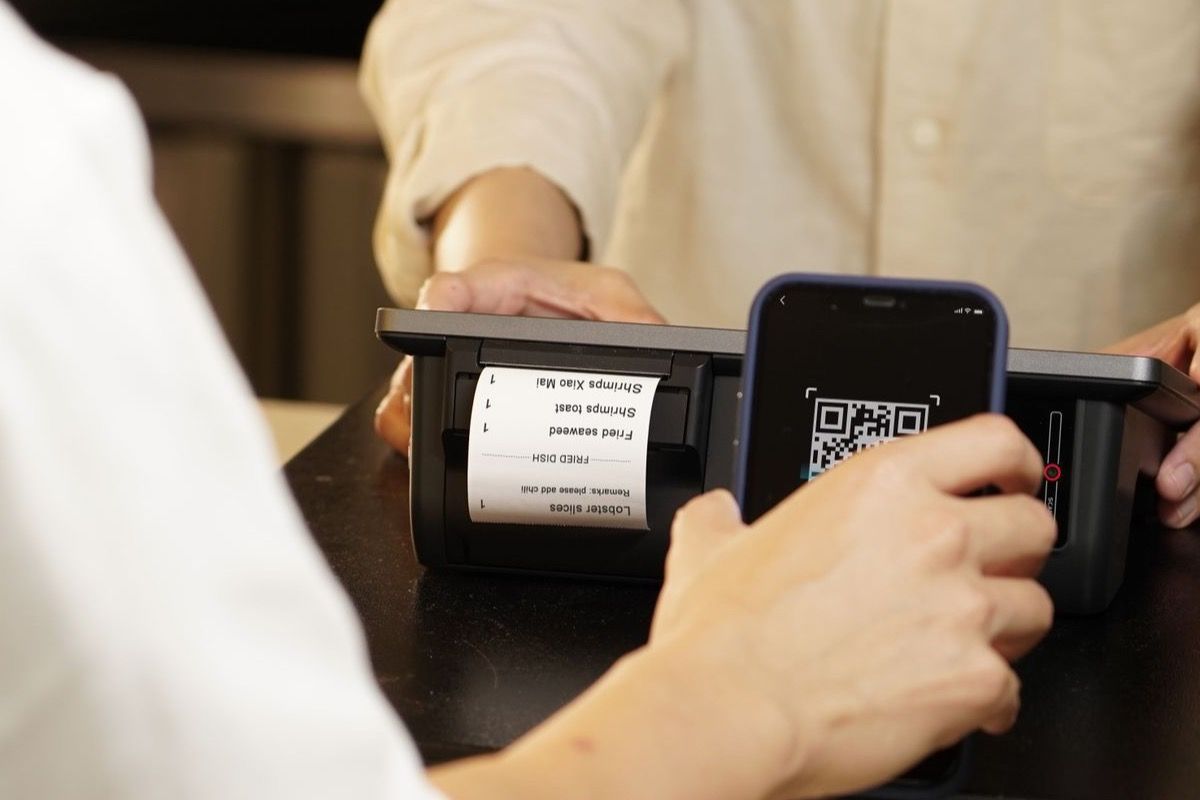
QR ordering solves real operational problems: it frees servers from reciting the menu, it eliminates the verbal-order error chain, and it gives guests control. It's not solving a hypothetical problem anymore — it's solving payroll, accuracy, and turnover.
Danny ran a two-week trial. His servers stopped walking tables just to answer "what comes with the brisket plate?" His kitchen stopped remaking orders that were misheard at the counter. His guests — including the two 70-year-old regulars he was sure would hate it — scanned without a single question. "The first day, one of my old-timers asked me if this was a gimmick," Danny told me. "By day three, he was annoyed when the code was covered by a ketchup bottle."
What This Means for Your Restaurant
Every technology wave has two kinds of adopters: those who wait to see if it's real, and those who watch the data. The data says QR ordering is now infrastructure, not experiment. Operators using QRfood report up to 90% fewer order errors and measurable labor savings — because order-taking minutes go back to the floor.
QRfood is built for this permanent shift: multilingual QR ordering that integrates with your existing POS, reduces order errors by up to 90%, and cuts labor costs. We're not betting on a trend. We're building for a structural change in how restaurants operate.
The 2015 Code Died Because Nobody Needed It
The 2015 QR code died because it solved a problem nobody had. The 2026 version solves problems every operator has: labor, accuracy, speed, language. That's the difference.
Danny's still running his QR menu. He's not asking "is this a fad?" anymore — he's asking how to get more of his regulars to use it. That's the answer to the question every owner is asking. QR codes aren't coming back. They never left — they just finally arrived.
👉 See why it sticks at qrfood.ai — start your free trial today.