🌏 Tsim Sha Tsui's Trilingual Challenge: Why Your Harbour View Restaurant Needs a Menu in Four Languages
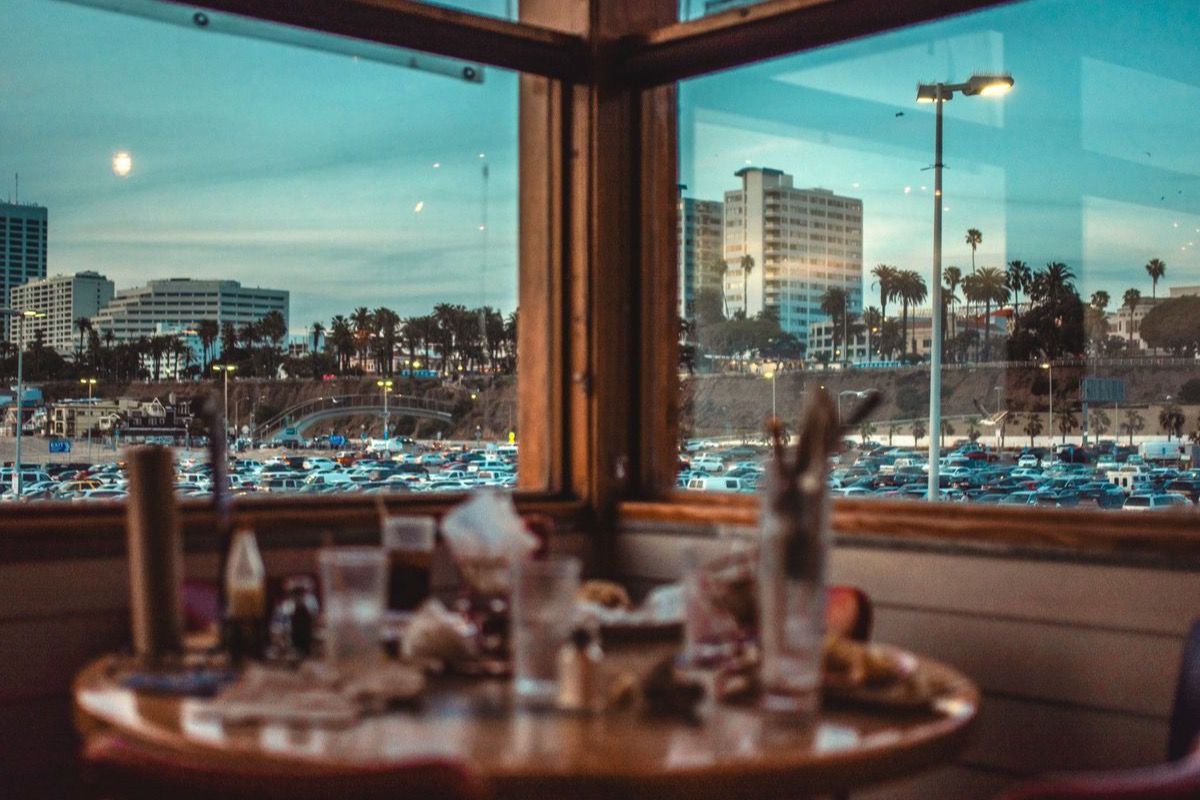
Victoria Harbour at sunset. My table by the window has the view that postcards are made of — the skyline turning amber, the Star Ferry cutting across the water, the lights coming on one tower at a time.
A Japanese couple settles in at the window. A mainland Chinese family of six takes the corner round table. Two American tourists grab the bar seats and order two beers before they even sit down.
I hand out four menus. It is the same menu — Traditional Chinese and English, printed on heavy stock, professionally designed, the kind of menu that cost me real money three years ago.
The Japanese couple smiles politely and struggles. The mainland family squints at the Traditional characters — they read Simplified, and the difference is not cosmetic when it is the difference between "steamed" and "deep-fried." The Americans are fine with English until they hit "deep-fried bean curd skin roll" and quietly decide to order the safe thing instead.
Nobody complained. That is the part that took me two years to understand. Nobody complains in Tsim Sha Tsui. They just order less, order wrong, or walk next door.
One menu, four kinds of diners, and one very expensive blind spot
Before COVID, Hong Kong welcomed more than 45 million visitors a year. Roughly 78% came from mainland China. Japan, Taiwan, South Korea and the United States made up most of the rest.
Tsim Sha Tsui is where that mix concentrates. Not in a theoretical, market-research way — in a literal, eight-tables-on-a-Tuesday way. Within one seating you can serve four different reading habits, three different character sets and two different ideas of what a menu is for.
And most of us hand all of them the same piece of laminated paper.
Your menu is not a document. It is the first thirty seconds of a transaction, and in TST those thirty seconds decide whether a group of six sits down or keeps walking.
The 78% problem nobody prints for
Here is the detail that catches almost every operator in Kowloon: mainland visitors read Simplified Chinese. Our menus are printed in Traditional.
To a Hong Konger the two scripts are cousins. To a first-time visitor from Shenzhen or Chengdu, Traditional characters slow the eye down. Some are instantly readable. Some are guessed from context. A few — 乾, 麵, 蘸 — require a small act of translation in the middle of a hungry decision.
That friction has a cost, and it shows up in the least visible place on your P&L: the guest orders the dish they can read fastest, not the dish you make the most margin on. They skip the section that looks like work. They order two dishes instead of three.
We saw it in our own numbers. Tables where the guest lingered over the menu ordered measurably more than tables where the menu was decoded in fifteen seconds and put down.
Why TST economics punish a monolingual menu harder than anywhere else
Rent in Tsim Sha Tsui is not a cost line. It is the defining constraint of the business. Every square foot is priced against the harbour view, and every seat has to earn its rent inside a compressed dinner window.
Foot traffic is enormous and completely unpredictable. A tour group walks past at 7:10pm and your dining room goes from half empty to a waitlist in four minutes. The same group walks past at 7:10pm tomorrow and you never see them.
That is why the arithmetic is so brutal. A tourist group of six that sits down is $800 or more in revenue. A group of six that glances at the menu board, sees characters they cannot parse, and keeps walking is $800 gone — not deferred, not lost to a competitor you can study, just gone.
You will never see that loss in a report. There is no line item for "table that did not sit." That is exactly why it compounds for years.
What the 2023 reopening actually proved
When Hong Kong reopened, the operators who recovered fastest were not the ones with the best food or the best location. They were the ones whose menus adapted fastest to a changed tourist mix — more Southeast Asian visitors, more Western independent travellers, more first-time mainland guests who had never navigated a Traditional Chinese menu in their lives.
The restaurants that bounced back had already moved to digital menus. Not because digital is fashionable, but because a digital menu is the only format where adding a fifth language costs nothing and takes four minutes.
A printed menu has a fixed number of languages. It is decided by the designer, locked at the printer, and paid for again every time you change a price. A QR menu has as many languages as your guests have passports.
What "trilingual" actually means in a TST dining room
I used to think trilingual meant Chinese, English and Japanese. Then I counted a single Friday night:
🇭🇰 Cantonese-speaking locals who want Traditional Chinese and honest prices.
🇨🇳 Mainland visitors who want Simplified Chinese, and who read dish names differently — 干炒牛河 versus 乾炒牛河 is the same plate, but one of them reads like home.
🇯🇵 Japanese tourists who want Japanese, and who are the most likely of any group to order the chef's set if it is explained properly.
🇰🇷 Korean visitors, increasingly numerous, who will order a sharing menu for the table if the portions are legible.
🇺🇸 English-speaking travellers who need "bean curd skin roll" translated into something that sounds like dinner.
That is five reading groups, not three. And the moment you write it down that way, the idea of printing five menus — five designs, five print runs, five reprints every price change — becomes obviously impossible.
What we changed, and what it did
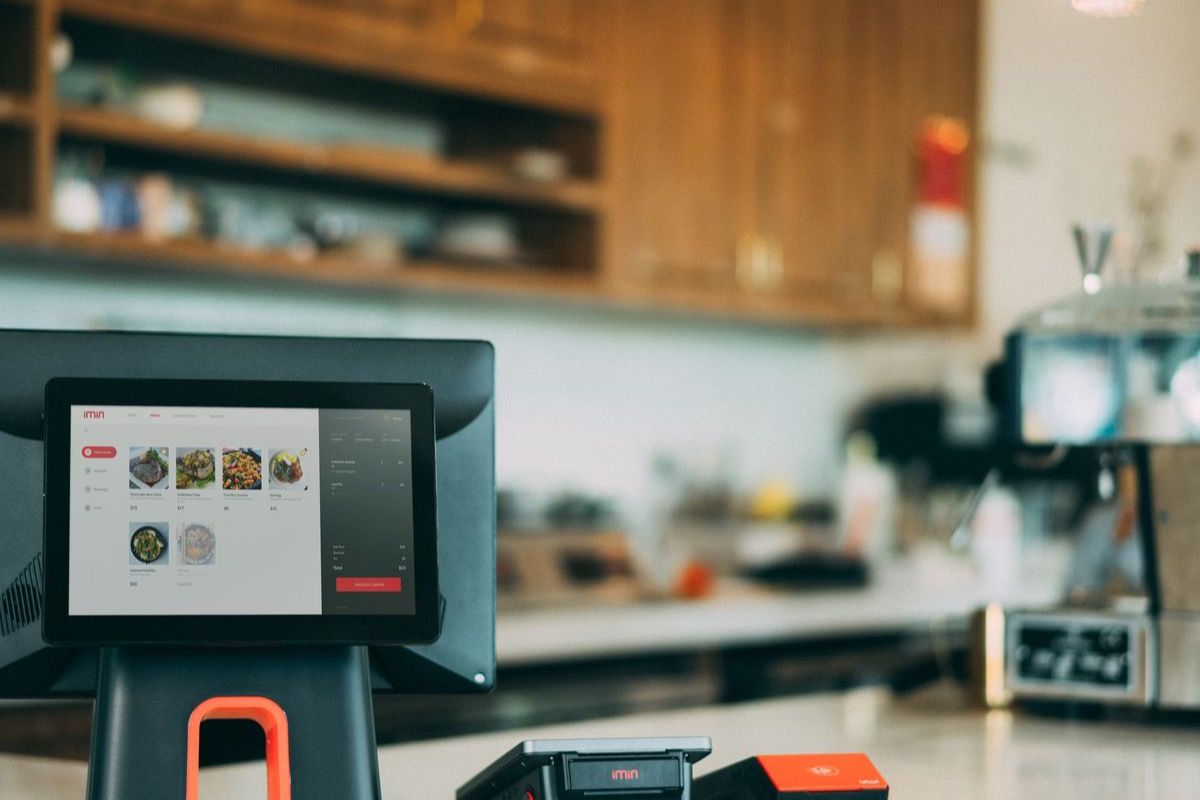
We put one QR code on each table, on the window decal, and on the takeaway counter. One code, and the guest picks their language: Traditional Chinese, Simplified Chinese, English, Japanese, Korean. Same dishes, same prices, same kitchen.
Three things changed within a month, and none of them were the things I expected.
First, average spend per tourist table moved. Not because prices went up, but because guests stopped self-limiting to the two dishes they could read. When the description under 避風塘炒蟹 says "typhoon shelter crab, garlic, chili, fried shallot" in your own language, you order it.
Second, order errors dropped. "Deep-fried bean curd skin roll" is not a mistranslation — it is accurate and completely unappetising. Written as "crispy bean curd sheet rolls, served with sweet chili" it sells. Same dish, different sentence.
Third — and this is the one I did not see coming — reviews changed. Visitors from Japan and Korea started mentioning that the menu was easy to understand. In TST, where every restaurant has a view and most have similar food, "the menu made sense" is a differentiator that costs nothing to earn.
The practical playbook for a harbour view dining room
1. Put the language selection before the food. If a guest has to scroll past four screens of dishes in the wrong script to find their language, you have already lost them. Language first, dishes second.
2. Do not translate dish names literally. Translate the experience. "Fish maw soup" needs a sentence of context; "rich seafood broth with fish maw, slow-simmered" does the same job better.
3. Keep the price identical across languages. Tourists compare. If the Japanese menu shows a different number than the English one, you have created a trust problem that no view can fix.
4. Photograph your top ten dishes. In a room where half the guests are decoding a script, a photo removes the decision risk entirely. Ten photos, shot once, used forever.
5. Update in seconds, not print runs. Seasonal crab, daily catch, sold-out items. A digital menu lets you correct the board at 6:55pm before the 7:00pm wave. A printed menu lets you apologise.
The numbers I actually track now
📈 Average spend on tables that switched language: up, driven by appetiser and dessert attach rate rather than price.
⏱️ Time from seating to first order: down, because the menu-reading phase no longer requires a server.
❌ Wrong-dish remakes: down, because descriptions carry the detail instead of the server's memory.
🖨️ Reprint spend: near zero. The last print run was the last one.
⭐ Review mentions of "easy to understand menu": the metric I never expected to care about, now one I read every week.
"But my guests are locals"
Some of them are. TST still has neighbourhood regulars who want their usual table and their usual order in Cantonese.
They are also the guests least likely to be lost by a menu, and the least likely to be gained by a fifth language. The digital menu does not take anything away from them — the default can be Traditional Chinese, and they never touch the language button.
The five-language menu is not for the regulars. It is for the $800 table that walks past at 7:10pm because nobody in the group could read the board.
The view gets them to the door. The menu gets them to sit.
In Tsim Sha Tsui you are not really competing on food. Half the street has good food. You are competing on the fifteen seconds between "this place looks nice" and "let's sit down."
A harbour view is an asset you pay for every month. A menu nobody can read is a tax on that asset, and it is the one line item you can delete this week.
One QR code. Five languages. Same kitchen, same prices, same view — just fewer guests walking away because they could not read what you were offering.
QRfood.ai supports Traditional Chinese, Simplified Chinese, English, Japanese, Korean and more. Free to start — put one code on one table and watch what happens at 7:10pm.