Why Tokyo's $5 Ramen Shop Has Better Tech Than Your Fine Dining Restaurant
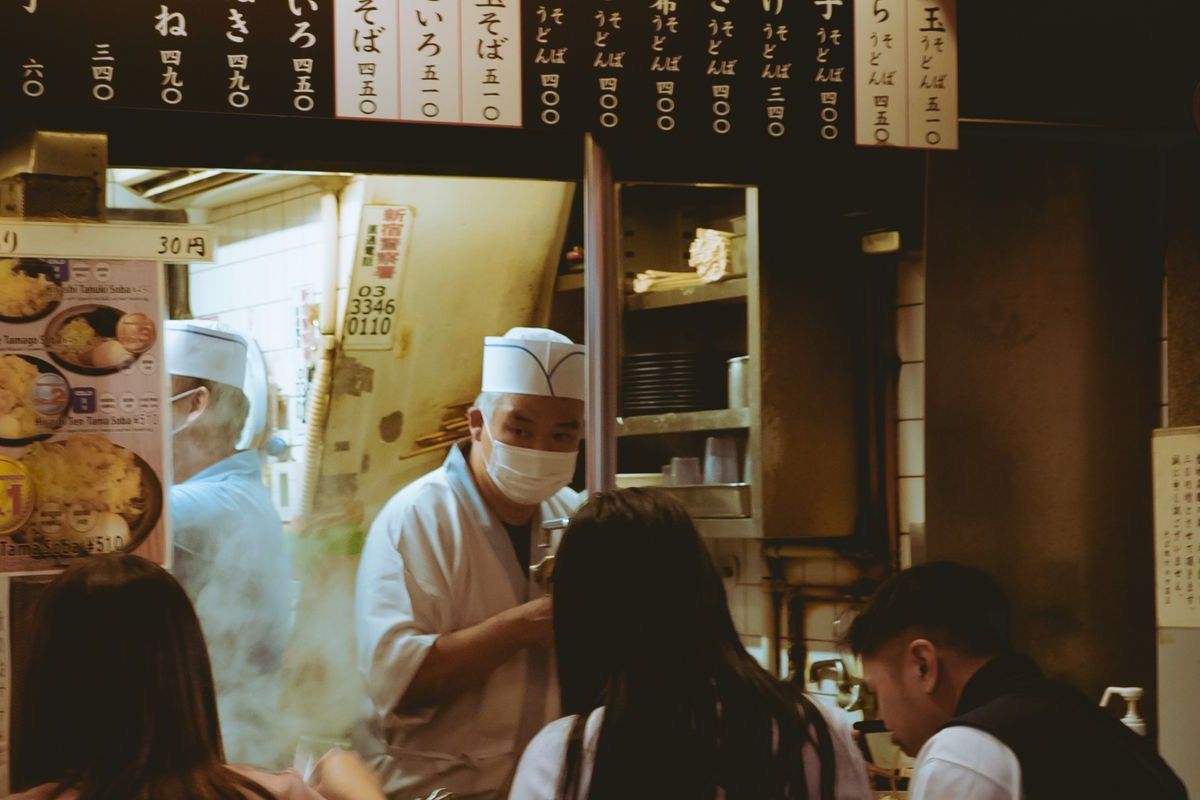
There's a ramen shop in Koenji, on the western edge of Tokyo, that does everything wrong by American fine-dining logic. Six counter seats. A cloth curtain instead of a door. The owner wears a towel wrapped around his head. A bowl of ramen costs $5.50.
And its ordering system runs better than 90% of the American restaurants I consult for.
The Order Takes 40 Seconds. The Bowl Takes Three Minutes.
You walk in. There is a QR code on the wall. You scan it with your phone. On the screen: broth richness, noodle firmness, extra toppings, spice level, garlic amount. You make your choices, pay with Apple Pay, and sit down. Three minutes later, the bowl lands in front of you.
No host. No server. No busser. No POS terminal with a line of six people waiting to tap a card. One person runs the entire shop: the chef. The QR code does the rest.
Meanwhile, the $200-a-Head Restaurant Is Still Writing Tickets by Hand
I've worked with restaurants in New York and Los Angeles where the average check is $200 per person. They have more staff on the floor than the ramen shop has seats. And a worse order accuracy rate.
Paper tickets. Servers scribbling modifications between tables. Tickets get lost, handwriting gets misread, dishes get comped because the kitchen could not parse "no onions, extra sauce, allergy." Every one of those errors is a cost the ramen shop in Koenji simply does not have.
The Gap Isn't Budget. It's Mindset.
Here is what people assume: the $5.50 shop is cheap, so of course it looks basic; the $200 restaurant is premium, so it must be sophisticated. That is backwards. The $5 ramen shop solved frictionless digital ordering with a $0 upfront tech investment.
That is the part American operators miss. In Japan, restaurants optimize ruthlessly at every price point — from a standing noodle counter to a three-Michelin-star omakase. Technology is not an upgrade you get to once you are profitable. It is the foundation you start on. The cheaper the menu, the more every second of labor and every wasted bowl actually matters.
The ramen owner is not paying for servers because he never built a system that needed them.
What "Frictionless" Actually Looks Like
Let me break down why the QR flow outperforms the paper one, point by point:
• No ordering bottleneck. On a busy night, a paper-ticket restaurant can take exactly as many simultaneous orders as it has servers. The QR shop takes as many orders as it has customers. There is no queue at the register, because there is no register.
• No transmission error. The customer's choice goes straight to the kitchen screen. Nothing is read aloud, repeated back, or written down. What the diner tapped is what the chef makes.
• No language barrier. The menu renders in the diner's own language. A tourist who does not read a word of Japanese orders the exact bowl they wanted — no pointing, no guessing, no wrong dish.
• No payment friction. Apple Pay or card, right on the phone. No hand-off of a card, no trip to a terminal, no "we will bring the machine over."
• No staffing dependency. On a night when someone calls in sick, the shop does not lose ordering capability. The QR code shows up for work every time.
This Is How QRfood Was Built
I do not say this as a spectator. QRfood was built inside exactly this optimization culture — for operators who treat ordering as infrastructure, not as a feature to bolt on later.
One QR code gives you a full digital menu in 10+ languages, with photos, descriptions, allergen notes, and prices. Guests order and pay from their own phone. Orders land in the kitchen instantly. You see every ticket and every trend in real time.
More than 500 Japanese restaurants already run on it — from $5 ramen counters to $500 omakase counters. Not because they had big tech budgets. Because they refused to accept friction as the price of doing business.
If a $5 Bowl Can Afford It, What's Your Excuse?
The ramen shop in Koenji does not have a bigger budget than you. It does not have more staff, more square footage, or more time. It has less of everything — and a better ordering system, because the owner decided that speed and accuracy were non-negotiable, at any price point.
That is the whole lesson. The question was never whether you can afford frictionless ordering. It is whether you can afford to keep tolerating the alternative: lost tickets, wrong dishes, comped meals, and a line at the register that never had to exist.
Start Lean. Start Smart.
If a shop selling $5 bowls can run on a QR code and a single chef, so can yours. Start free at qrfood.ai. Scan. Order. Serve. Grow.