I Cut $1,200 a Year From My Menu Budget. Here's the Math.
Every Tuesday morning, before the produce truck backs into the alley behind my restaurant, I do the same thing I have done for eleven years: I look at what came in, what did not, and what the menu has to say about it.
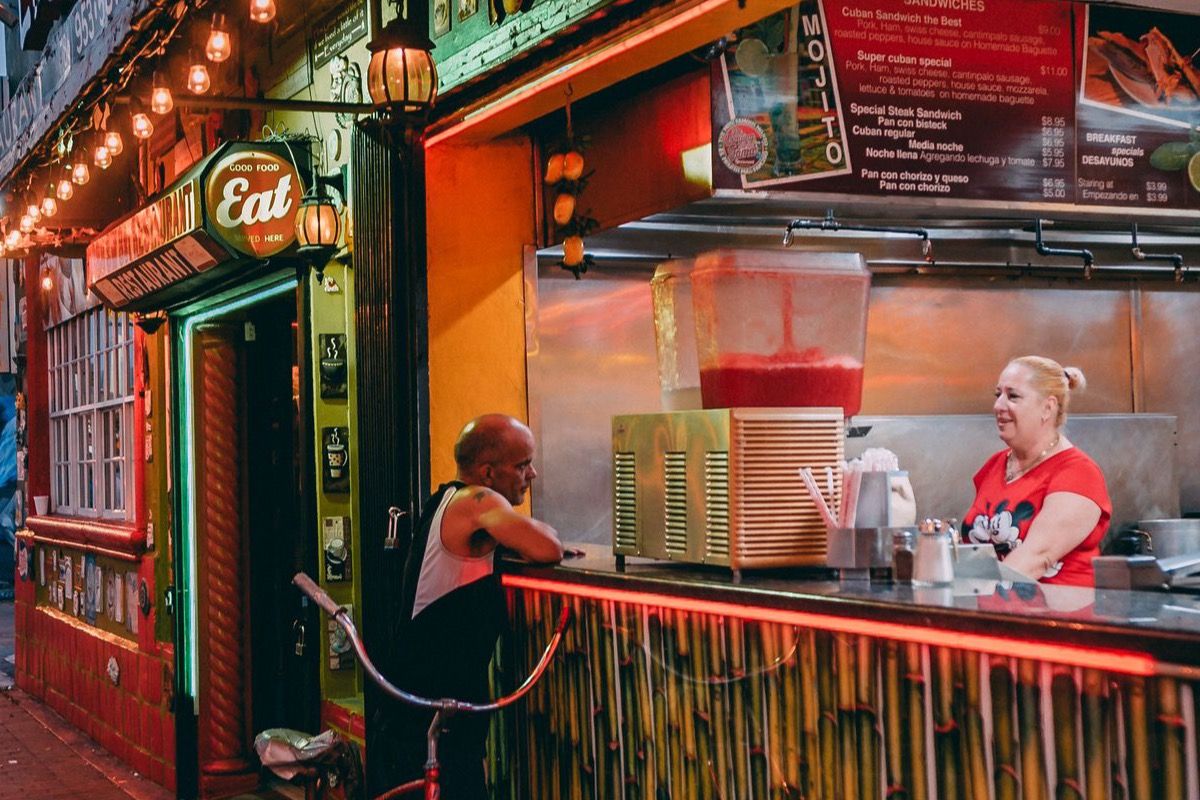
I run a Cuban restaurant in Miami. We are not a white-tablecloth room with a tasting menu that changes four times a year. We are a 62-seat neighborhood place where the plantains are sometimes perfect and sometimes simply not available, where the fish special depends on what the market had at six in the morning, and where the price of a plate of ropa vieja has to keep pace with what beef actually costs this month.
For a decade, that reality fought a losing battle with paper.
The Year I Finally Added It Up
I had always known menus were expensive. I had never written the number down. So one January I did, using the previous year's invoices.
Graphic designer to reformat updated pages: $200 a pass, three to four passes a year. Call it $700.
Printing 500 menus, English and Spanish versions: $350 a run, twice a year. $700.
Lamination and shipping: $100.
Total: roughly $1,500, on a menu that was out of date the day the boxes arrived.
That last part is the sentence I want you to sit with. The $1,500 was not the expensive part. The expensive part was paying for accuracy and receiving a printed guess.
Why Paper Fails a Cuban Menu Specifically
Three things break at once.
Seasonality. Plantains, avocados, certain cuts — availability moves week to week. A printed menu promises things the kitchen cannot deliver, and a guest who orders something you no longer have is a guest you have already disappointed.
Price volatility. Beef, pork, and cooking oil move. When a plate's cost goes up sixty cents, you either absorb it silently or you reprint. Most of us absorbed it, which means the menu was quietly lying about our margins.
Bilingual service. Half our guests order in Spanish. Bilingual print means double the layout, double the proofreading, and double the cost of every typo.
The White-Out Problem
For years our menu had a pen problem. A dish went up two dollars and someone in the back office wrote the new number on forty menus with a Sharpie. Some guests found it charming. My accountant did not find it charming. Neither did the tourists who photographed a menu with three scratched-out prices and decided to eat somewhere else.
A menu is not a piece of paper. It is the first thing a guest reads about your business, and it is the only sales document every single customer sees.
Three Minutes, Zero Dollars
I set up a QRfood menu on a Tuesday afternoon, between prep and service. Setup took three minutes. Cost: zero. The free plan did not ask for a card.
The workflow now looks like this: the kitchen tells me the grouper is gone, I open the dashboard on my phone, mark it unavailable, and the change is live before the next table sits down. Thirty seconds. No designer, no printer, no shipping, no boxes.
The menu itself is a mobile page, not a PDF. Photos, categories, prices, and a language toggle — English or Spanish — so a guest chooses their own version instead of flipping to the back of a laminated sheet.
The Twelve-Month Scorecard
Designer: $0, down from $700.
Printing: $0, down from $700.
Lamination and shipping: $0, down from $100.
Software: $0. I stayed on the free plan. I upgraded for a few months to see the analytics, then went back, because a 62-seat room does not need a dashboard to know that the lechon sells.
One-time hardware: about $60 for a tablet mount and printed table tents with the QR code.
Net saved in year one: roughly $1,200.
$1,200 is not a transformation. It is a new prep table, or a weekend off for two line cooks, or four months of the small things that keep a kitchen running. For an independent restaurant running a four to six percent margin, $1,200 is the profit on roughly $20,000 to $30,000 of sales. You have to sell a lot of sandwiches to earn back a menu.
The Cost I Was Not Counting
The printing number was the visible cost. The invisible one was price lag.
We underprice things for weeks at a time because updating a printed menu is a project. If three proteins are each fifty cents behind the market and we sell forty of those plates a week, that is $60 a week — about $3,100 a year in margin that quietly disappears, more than twice the printing bill.
With a digital menu, a price change costs nothing but the decision. That is the part I did not expect to matter most. The printing savings paid for the tablet mount. The margin recovery paid for the year.
What About Guests Who Do Not Want a Phone?
Some do not, and that is fine. We keep eight printed menus behind the host stand for anyone who asks, refreshed twice a year on a home printer rather than at a print shop. The difference is that paper is now the backup, not the source of truth.
A QR code at the table also does something a printed menu cannot: it answers the question before it is asked. Hours, allergens, what is in the mojo, whether the croquetas contain pork. My staff spends less time reciting and more time on the floor.
If You Are Still Printing, Do This First
1) Pull last year's menu invoices. Add design, print, lamination, and shipping. Most operators guess low by forty percent.
2) Count how many times a price or an item changed in the last twelve months. That number is your real reprint cadence, and it is almost always higher than your print cycle.
3) Count the bilingual cost separately. It is usually the line item nobody budgets.
4) Run a digital menu free for one season before you cancel anything. Compare the two, then decide with your own numbers instead of mine.
The Menu Is a Living Document
My menu still changes with the market. It just does not cost $350 and three weeks to change with the market. Last month we ran a snapper special for nine days and pulled it when the boat did not go out. Under the old system, that special would have been printed, laminated, and wrong by Thursday.
Three minutes. Zero dollars. And a menu that tells the truth on the day the guest reads it.
You can try it free at qrfood.ai — no card, no contract, no print run.