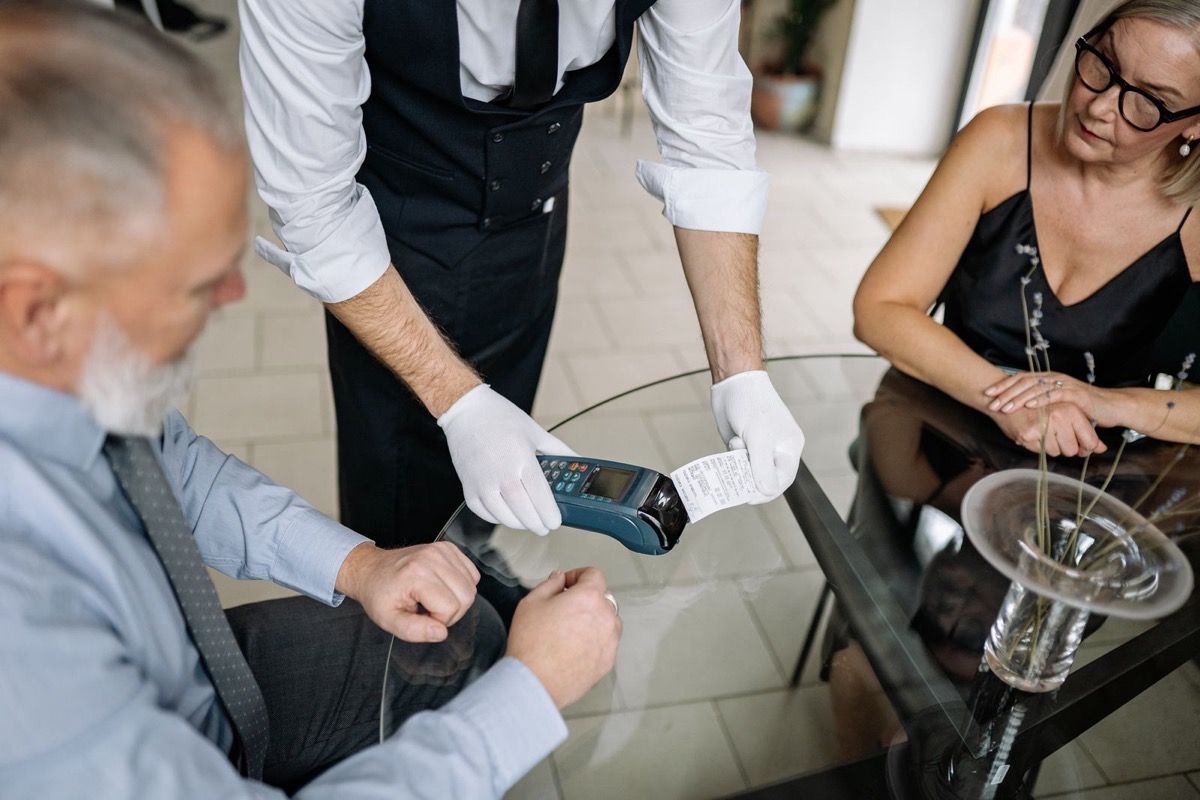
Your Customer Finished Eating 12 Minutes Ago. They're Still Waiting for the Check.
It's 7:40 on a Friday night. Table 7 finished eating ten minutes ago. The plates are pushed to the far edge of the table. Three phones are out. One person keeps glancing toward the kitchen door, hoping to catch the eye of someone — anyone — who can bring the bill.
You have one server on the floor, and she's already running between six tables. The check is coming. But in restaurant time, "coming" means another five to eight minutes — which feels like an eternity to a guest who finished their meal and just wants to go home.
The Eight Minutes After the Meal Are the Most Dangerous of the Night
Here's the thing about those eight minutes: the food is already forgotten. The experience is over. The only thing the guest has left to evaluate is how long it takes you to let them leave. And that is the exact moment they pull out their phone.
They open Yelp. They see your 3-star rating. They read the review from two weeks ago about the slow service. They decide — right there, at table 7 — to try somewhere else next time. Or worse: they add their own review on the way out, and hundreds of future diners now know exactly how long you made them wait for the bill.
42% of Diners Say the Bill Is Their Biggest Frustration. Not the Food.
This isn't a hunch. A study by Upserve found that 42% of diners name slow payment as their number-one frustration when eating out. Not the food. Not the noise. Not the atmosphere. The bill.
Read that again. Diners will forgive a slightly dry chicken breast. They will forgive a cramped table. What they will not forgive is being held hostage at the end of an otherwise good meal, waiting for a piece of paper that a system should have handed them thirty seconds after they wanted it.
The Math of a Slow Checkout
Let's put numbers on it. Say you run 40 tables a night and the average check is $34 for two. If a slow checkout adds just eight minutes to each table's stay, you are losing table-turns that never show up on any report.
Eight minutes on a 60-minute meal is a 13% longer table cycle. Across a dinner rush, that is one or two full table-turns you simply never get to serve — real revenue that walked out the door because the last step of the night was the slowest.
And that is before we count the guests who don't come back. A 2026 survey of casual-dining regulars found that one in four said a slow checkout would make them choose a different restaurant next time — even if they loved the food.
One Server, Six Tables, One Card Terminal
The problem is structural, not personal. Your server isn't slow. She is physically in one place at a time, holding one card terminal, processing one payment. Meanwhile six tables want to pay at roughly the same moment — the end of the meal — because that's how dinner works.
So the terminal becomes a bottleneck, the bottleneck becomes a queue, and the queue becomes the memory your guest takes home. You can hire another server to fix it, or you can stop making payment a physical, one-at-a-time event.
What Pay-at-the-Table Actually Changes
This is the exact problem QRfood was built to eliminate. When guests order through the QR code, they can pay through the same interface. No server, no terminal, no hand-off.
The bill appears on the guest's own phone the moment they're ready. They split it with the tap of a button. They add the tip on the screen — no math, no awkward percentage guess. They pay with Apple Pay or a card. Done. They can leave whenever they're ready, and so can you.
One tap replaces a five-minute hand-off. Six tables can pay at once instead of queuing for the one terminal. Your server stops being a payment courier and goes back to being a host.
Faster Checkout Doesn't Mean Rushing People Out
Some operators worry that fast checkout feels impersonal — that guests want the ritual of the bill, the little folder, the moment of service. That is not what the data says.
Guests don't want a slow checkout. They want the option to pay quickly when they're ready. When the bill is one tap away, guests actually linger longer on the parts of the meal they enjoy — another round, another dessert — because they know leaving will be effortless. Friction at the end makes people anxious to escape. Frictionlessness lets them relax.
The Last Impression Is the One They Write About
Think about how you'd describe your own restaurant to a friend. Nobody says "the food was great and then we sat there for eleven minutes trying to flag someone down." But that is exactly the sentence that ends up in a review — because the end of the meal is the freshest thing in a guest's memory.
You cannot out-cook a slow goodbye. The best kitchen in the city can be undone by a bill that takes twelve minutes to arrive.
Speed Up the Finish Line
Your food is done. Your guest's meal is done. Let the transaction be done too. When ordering and payment live in the same QR flow, checkout stops being the worst part of the night — and starts being invisible.
Speed up your checkout. Start free at qrfood.ai.