The line that never moves
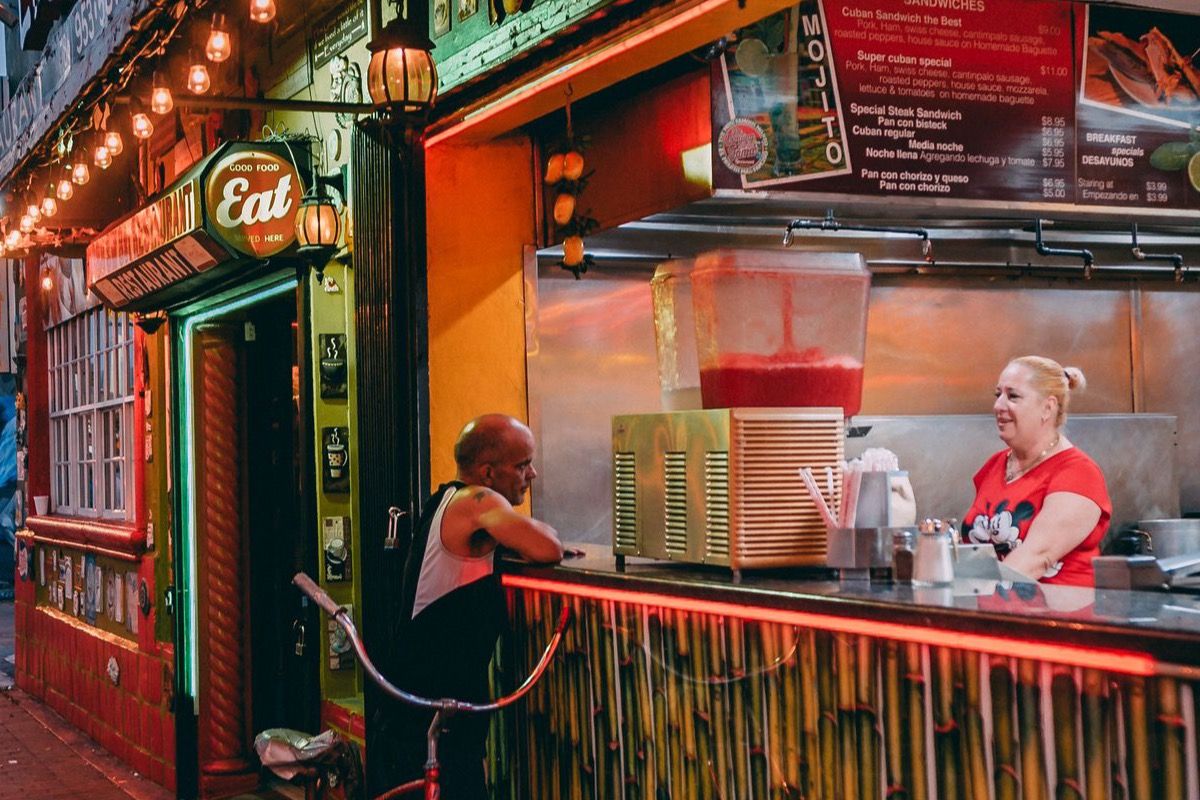
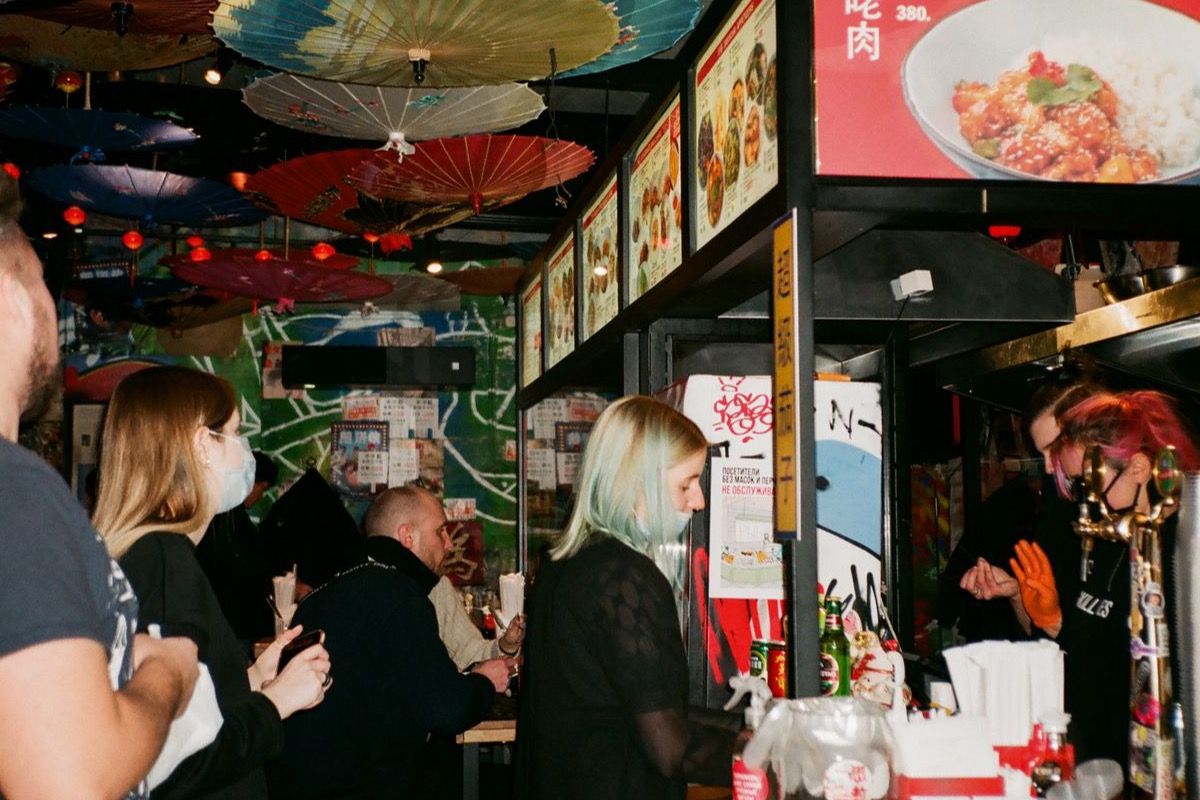
It is 11:47 on a Tuesday in Miami, and there are fourteen people between the door and the register. The bowl shop does 180 covers in a two-hour window. The food is fast. The kitchen is fine. The problem is a single position: one cashier taking orders, one expo bagging and running. No matter how fast the kitchen moves, the line only moves as fast as the person saying "bowl or wrap?"
I have watched this exact scene in fast-casual concepts from Brickell to Austin to Denver. The counter-service model is one of the most efficient formats ever designed for restaurants — until the register becomes the throughput ceiling. And that ceiling is expensive in a way most operators never put on a spreadsheet.
What the register position actually costs
Start with the wage, then add everything the wage hides. At $16 an hour, eight hours a day, five days a week, the cashier line reads $640 a week. Multiply by 52 and you have $33,280. Then add employer FICA at 7.65%, workers compensation, paid sick time, and the paid hours that go into training and shift handoffs, and the real number lands near $35,000 a year.
$35,000. For one person to stand at a screen and repeat the same six questions. In a 60-seat shop doing roughly $1.4 million a year, that single position is about 2.5% of revenue before a single bowl is sold.
The idle 40% problem
Here is the part that stings. That position is not evenly loaded. During the lunch rush it is crushed — 90 orders an hour, no pause, a line out the door. Between 2:30 and 5:00 it is a person leaning on a counter, wiping down a POS screen, waiting. Across a typical day, the register is genuinely busy maybe 60% of the time and structurally idle the other 40%.
You cannot schedule 60% of a person. You either pay for the idle time or you understaff the rush and lose sales you never see — the guests who looked at the line and kept walking. Both options are expensive. Most operators only count the first one.
The six-hour shift, side by side
Take a realistic lunch shift of six hours. The traditional lineup is one cashier at $16 an hour ($96) plus one expo at roughly $14.67 an hour ($88), for $184 in front-of-house labor.
Now move ordering to the guest's phone. Guests scan at the table or order before they arrive, pay digitally, and pick up when the ticket is called. No cashier is required for order-taking. The same shift becomes one expo and bagger at $88.
That is $96 saved per shift. Run it 300 days a year — six days a week, allowing for holidays — and you are looking at $28,800 annually from a single position, without touching the kitchen, the menu, or the price of a bowl.
Across a full year with weekend volume, the number moves closer to $32,000. The exact figure depends on your wage scale, but the structure holds: you are not trimming service, you are removing a queue that no longer needs to exist.
This is a redeployment story, not a layoff story
I want to be careful here, because "labor savings" usually means someone loses a shift. In the concepts I have worked with, it rarely plays out that way. Fast-casual turnover runs high — often 75% to 100% annually — and there is almost always an open prep, expo, or delivery-assembly shift. The cashier who is good with guests is usually the person you want on expo, where they can fix problems before the guest sees them.
The real win is not fewer people. It is that your people stop being cashiers and start being hosts, runners, and quality control. That is the version of labor savings that survives contact with a busy Saturday.
The honest tradeoffs
QR ordering is not magic, and I will not pretend the register disappears cleanly. Four things need attention.
First, guests who are not comfortable with phones. Keep one register — not for the rush, but for the table that asks. The goal is eliminating the mandatory queue, not eliminating the human option.
Second, upsell. A good cashier suggests the drink and the side. A menu has to do that work visually, which means the digital menu needs real photos, clear modifiers, and a default that makes the obvious add-on easy.
Third, ticket pacing. Without a cashier, orders hit the kitchen in bursts. You need to watch the rail in the first two weeks and adjust prep timing, or you trade a front-of-house bottleneck for a kitchen one.
Fourth, handoff. Someone still has to call names, check bags, and keep the pickup shelf from turning into a pile. That is the expo role, and it becomes more important, not less.
The slow-period win nobody talks about
The lunch rush gets all the attention, but the 2:30 to 5:00 window is where QR ordering quietly pays for itself. With a register, you need coverage no matter what — someone has to be there to take the four orders that come in. With phone ordering, one person can run the counter, restock, and hand off takeout without ever leaving the line. On a rainy Tuesday in August, that is the difference between three people on the clock and two.
The metric that actually matters
Do not measure this in dollars saved in week one. Measure guests per labor hour. Before: 180 lunch guests across roughly six front-of-house labor hours, or 30 guests per labor hour. After: the same 180 guests across about three labor hours, or 60 per labor hour.
That ratio is the number that lets you hold a lower price, pay a better wage, or open a second location without doubling your management load. Labor cost percentage is a symptom. Throughput per labor hour is the cause.
How to run the change without drama
Pilot it. Pick the two-week window with the most stable volume, put table tents and a counter card at the door, and keep one register live the whole time. Brief the team in a five-minute standup: what changes, what does not, and what to say when someone asks for a person. Then watch three things — average ticket, ticket time, and the number of guests who walk in, see the room, and leave.
If average ticket holds and walkouts drop, you have your answer. In most fast-casual pilots I have seen, both move in the right direction within ten days, because the guest who would have abandoned the line now orders from the table.
The bottom line
A register position is a $35,000 solution to a problem that phone ordering solved years ago. The line at your counter is not proof that you are busy. It is proof that your throughput has a ceiling, and that ceiling has a price tag.
qrfood.ai sets up in minutes: guests scan, order, pay, and pick up. No queue, no register coverage, and a front-of-house labor line that finally matches the actual work being done. Start free at qrfood.ai.