Table Turns Up 20%: The Only Change This Seattle Thai Restaurant Made
I have owned a 60-seat Thai restaurant on Rainier Avenue in Seattle for six years. Before that I cooked in other people's kitchens for eleven. In all that time, one number has kept me up at night more than food cost or labor: table turns.
Same rent. Same six servers. Same 20 tables. Every extra turn is revenue that costs me almost nothing to produce. I understood the math long before I understood how to move the number.
For years I attacked it the obvious ways. I rearranged the wok station to shave ninety seconds off pad see ew. I hired a busser whose only job was pre-bussing. I bought handhelds so servers could send orders from the floor instead of walking to the POS. Each fix moved the average table time by a minute or two. None of them moved it by eleven.
The 52-minute table
In the spring of 2025 I pulled ninety days of POS timestamps and sat down with a stopwatch during service. The average table, from the moment guests were seated to the moment the check was closed, ran 52 minutes. Here is where the time was actually going.
2 to 3 minutes waiting for menus after being seated, because the host was also running the waitlist. 3 to 5 minutes between a table deciding they were ready and a server being free to take the order. Another 2 minutes of "what do you recommend?" browsing because the paper menu gave them no photos and no context. And roughly 2 minutes per table spent answering "are you out of the crab fried rice?" — sometimes twice, because the kitchen 86'd it at 7:40 and the printed menu still said otherwise.
Add it up: eleven to twelve minutes per table were pure waiting. Not cooking. Not eating. Waiting. And every one of those minutes was mine to lose.
What we changed — and what we deliberately did not
We did not buy tablets. We did not rip out the paper menus. We did not add a kiosk by the door or ask guests to download anything.
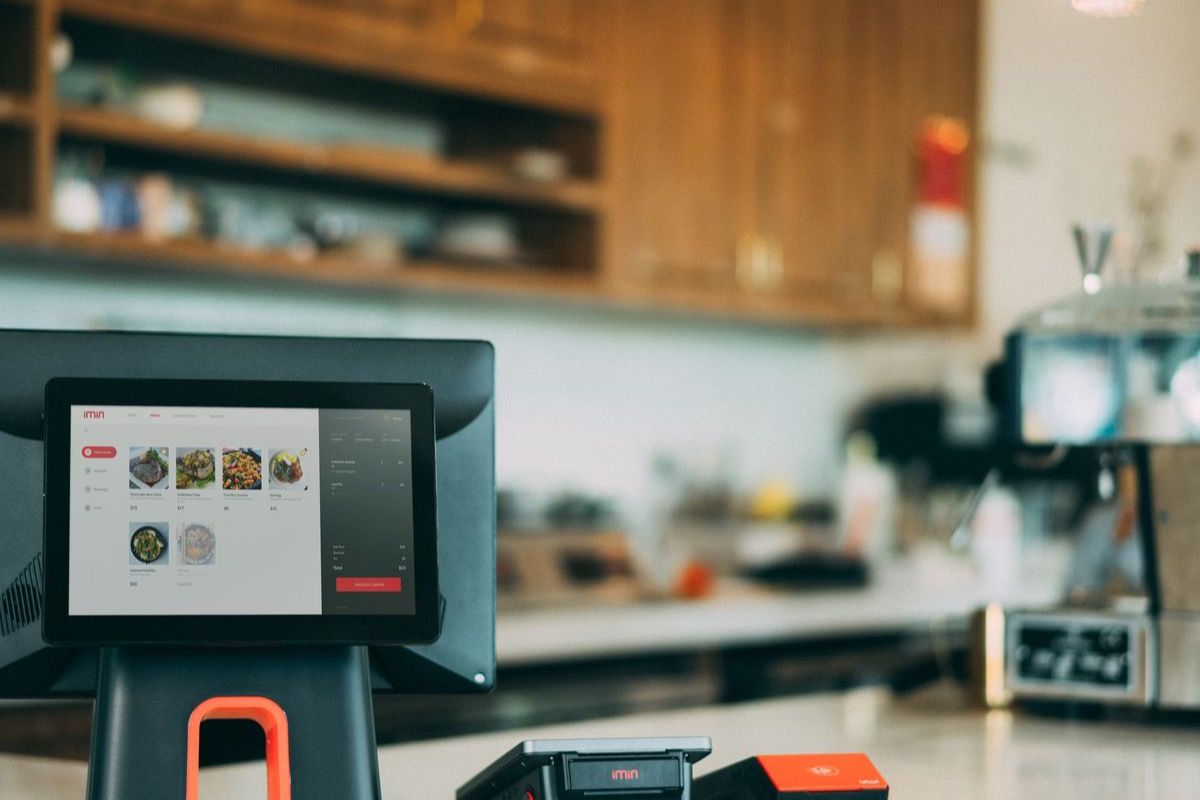
We printed QRfood QR codes onto the table tents that were already on every table. Guests scan with their phone camera, the menu opens in the browser in about a second, and it is the same menu the kitchen sees. Setup took three minutes per table. Total cost, at our volume, was less than what we spend on printed menus in a single quarter.
We kept six laminated paper menus behind the host stand for anyone who asks — older guests, tourists with a dead battery, the occasional person who simply prefers paper. In six months, we hand out about four a week.
The 41-minute table
Ninety days after the table tents went down, I pulled the same POS report. Average table time: 41 minutes.
Nobody changed how fast we cook. The kitchen is the same kitchen, with the same two woks and the same chef who has been with me since 2021. The eleven minutes came out of the front of the meal, not the middle of it.
Where the eleven minutes actually came from
About four minutes came from ordering earlier. Guests scan while they are still settling in, before anyone greets them. By the time a server arrives, they have usually decided — and they have seen the photo of the crying tiger, which does more selling than any sentence I could write on a paper menu.
About three minutes came from the end of sold-out conversations. When we 86 a dish, my manager pulls it from the digital menu in about twenty seconds. No table spends four minutes debating a dish that no longer exists.
About two minutes came from the check. The menu shows prices and totals clearly, so there is less back-and-forth about what things cost, and guests tend to ask for the check the moment they are done rather than waiting for a server to walk past.
The last two minutes came from menu handoffs — the small dead time between a table sitting down, receiving menus, and starting to read. That gap has essentially disappeared.
The math on a Friday night
We run 20 tables and turn them about 2.5 times on a busy Friday. Twenty tables times 2.5 turns times eleven minutes is 550 minutes of waiting we no longer serve. Divide by the new 41-minute table and that is roughly 13 additional table slots in a single evening.
At our average check of $35, that is $455 a night. On a Saturday it is often higher. Over a month of weekend rushes, it lands in the low four figures — from a change that cost me an afternoon and no hardware.
Now the honest caveat, because I have read too many vendor case studies that skip it. Table turns only convert to revenue if there are people waiting at the door. On a rainy Tuesday in February, saving eleven minutes per table saves me nothing, because the next table does not exist. I model the gain at maybe 60 percent capture on Friday and Saturday and near zero midweek. That still puts us around $2,000 to $2,400 a month in additional revenue, and it is the most reliable $2,000 I have ever found.
The part that surprised me most
I expected the speed. I did not expect how much the sold-out problem was costing us socially. When a guest orders something and then learns it is gone, you lose more than a dish — you lose the version of the evening they had already imagined. Since the menu updates itself, that conversation has mostly vanished, and the room feels calmer at 8pm than it used to.
My staff was skeptical. For about three weeks.
My lead server, Mai, has worked the floor for four years and told me plainly: "People like paper menus. They like holding something." She was right about some people. She was wrong about most.
Three weeks in, she was the one reminding me to update the specials before service. Her reason was practical: with the digital menu doing the explaining, she spends her shift selling and reading tables instead of reciting ingredients. Her tips went up. That settled the debate faster than any argument I could have made.
The reviews noticed before I did
Around month two, Google reviews started mentioning speed without being prompted. "Food came out fast." "Didn't have to wait to order." Our rating drifted from 4.6 to 4.8 over the following four months, and the review count grew faster than it had in the previous year. I am not going to claim a QR code caused a rating change. I will claim that removing eleven minutes of waiting from a guest's evening makes them remember the evening differently.
What this is not
A QR menu does not fix a slow kitchen. It does not rescue a menu with forty items and no point of view. It does not replace a server who can read a table. If your food is inconsistent, this change will simply get guests to the disappointment faster.
What it does is remove waiting — the part of the experience that has nothing to do with hospitality and everything to do with logistics. Eleven minutes per table, at 20 tables, twice a night, is a business decision hiding in plain sight.
Three things you can copy this week
First, measure before you change anything. Pull 30 days of POS timestamps and calculate your real average table time. Most owners guess, and most owners guess 8 to 10 minutes faster than reality.
Second, put the code where people already look. Not a sign by the door. Not a sticker on the window. On the table, at eye level, where the paper menu used to sit.
Third, keep paper for the people who want it and stop apologizing for the ones who do not. The transition costs you nothing and the holdouts are a smaller group every year.
We made one change. Three minutes per table to set up. No hardware, no new staff, no new kitchen. Eleven minutes back on every table, every night.
qrfood.ai — three minutes to faster tables.