The Labor Crunch Isn't Going Away — How QR Ordering Fills the Gap
It's 7:40 on a Friday night and you are down two servers. Not because you didn't hire — because one called out at 4:15 and the other quit on Wednesday. Your three remaining people are doing the work of five: taking orders, running cards, answering "is the risotto gluten-free," resetting tables that guests abandoned because nobody got to them in time.
The kitchen is backed up, and not because the line cooks are slow. Table 8's ticket was handwritten at an angle in bad light, and "chicken sandwich, no mayo" came across the pass as "chicken salad." So a remake goes in the window, the fryer gets jammed with a second order, and the whole rail slides eight minutes behind.
That is not a staffing story. That is a systems story that shows up as a staffing story. And it repeats in thousands of American restaurants every weekend.
The Gap Is Structural, Not Seasonal
The Bureau of Labor Statistics projects food service employment will stay roughly 5–7% below pre-pandemic levels through 2028. That's not a temporary squeeze you can wait out. It's the operating environment for the rest of this decade: fewer bodies on the floor, same number of covers, and guests who expect the same experience they got in 2019.
Meanwhile the cost of the people you do have keeps climbing. Wages are up, and they are not coming back down. Every owner I talk to has run the same spreadsheet: either raise prices, cut hours, or make each hour of labor worth more. The first two have ceilings. The third is the only one you can compound.
QR ordering does not replace your staff. It makes the staff you already have dramatically more effective — and the difference is measurable in minutes, not vibes.
The Chicago Case: 160 Minutes Recovered in One Shift
A 60-seat casual dining room in Chicago ran a 2025 pilot with QRfood across its full dinner service. The numbers below are theirs, tracked over eight weeks against their own pre-install baseline:
• Server touch time per table: 14 minutes down to 6 minutes — the transactional work (taking the order, processing payment, answering menu questions) moves to the guest's phone.
• Recovered capacity: 8 minutes × 20 tables per shift = 160 minutes. That's 2.6 hours of server capacity added without a single new hire, a single shift posted, or a single dollar of payroll.
• Table turn time: 52 minutes down to 38 — 27% faster, with no change to the kitchen or the menu.
• Covers per night: 65 up to 82. Same room, same seats, same staff count.
Read those last two lines together, because that's where the margin is. A 27% faster turn on a Friday night is not a convenience feature. At a $42 average check, 17 extra covers is roughly $714 in revenue from a room that was already full.
Where Those Eight Minutes Actually Live
Owners are usually surprised by the breakdown, because none of it feels like waste while you're doing it:
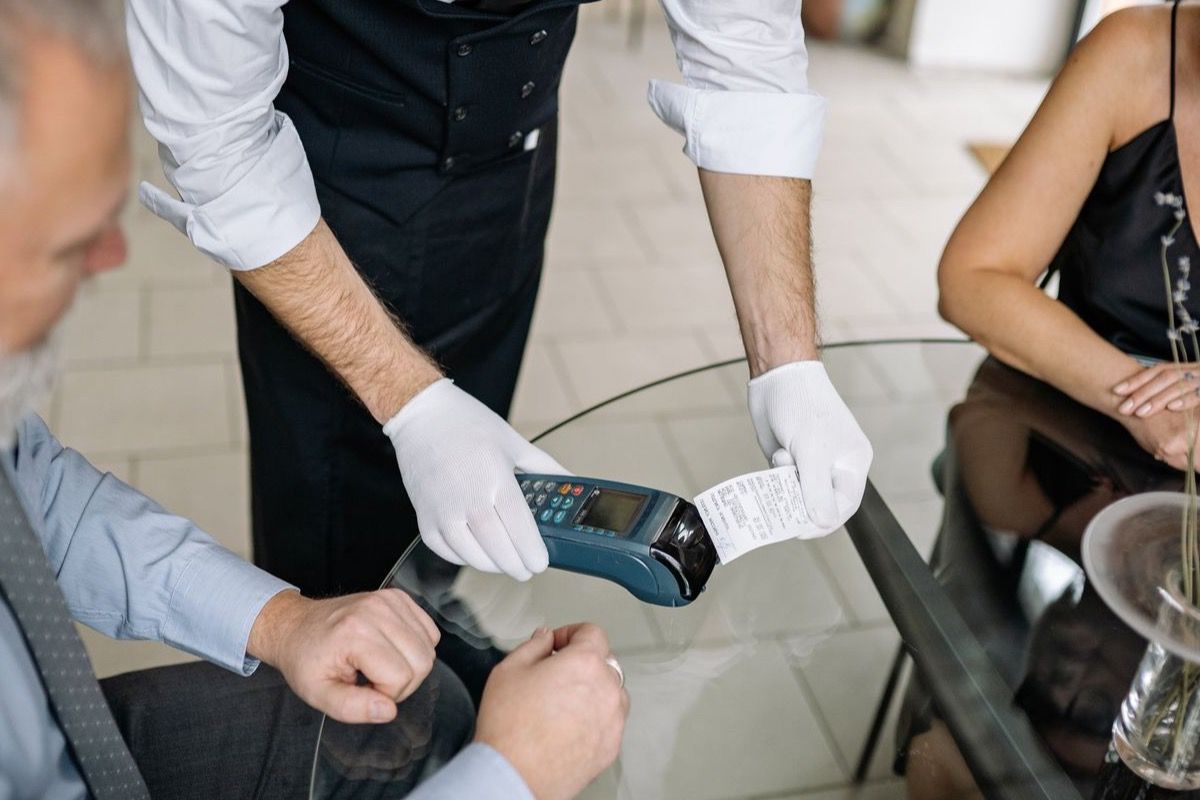
Taking the order is the big one — four to five minutes at a table of four, longer if there are questions, modifications, or a guest who wants the sauce on the side and the salad undressed. Then payment: three to four minutes if the card reader works, eight if it doesn't, and longer every time a party of six wants to split the check three ways. In most full-service rooms, one in three tables splits.
Then the invisible layer: walking back to answer "what's in the aioli," walking back again because someone forgot to ask about the specials, walking back a third time with the card reader. Each trip is 90 seconds. Five trips per table per service is seven and a half minutes — and that is the number that disappears.
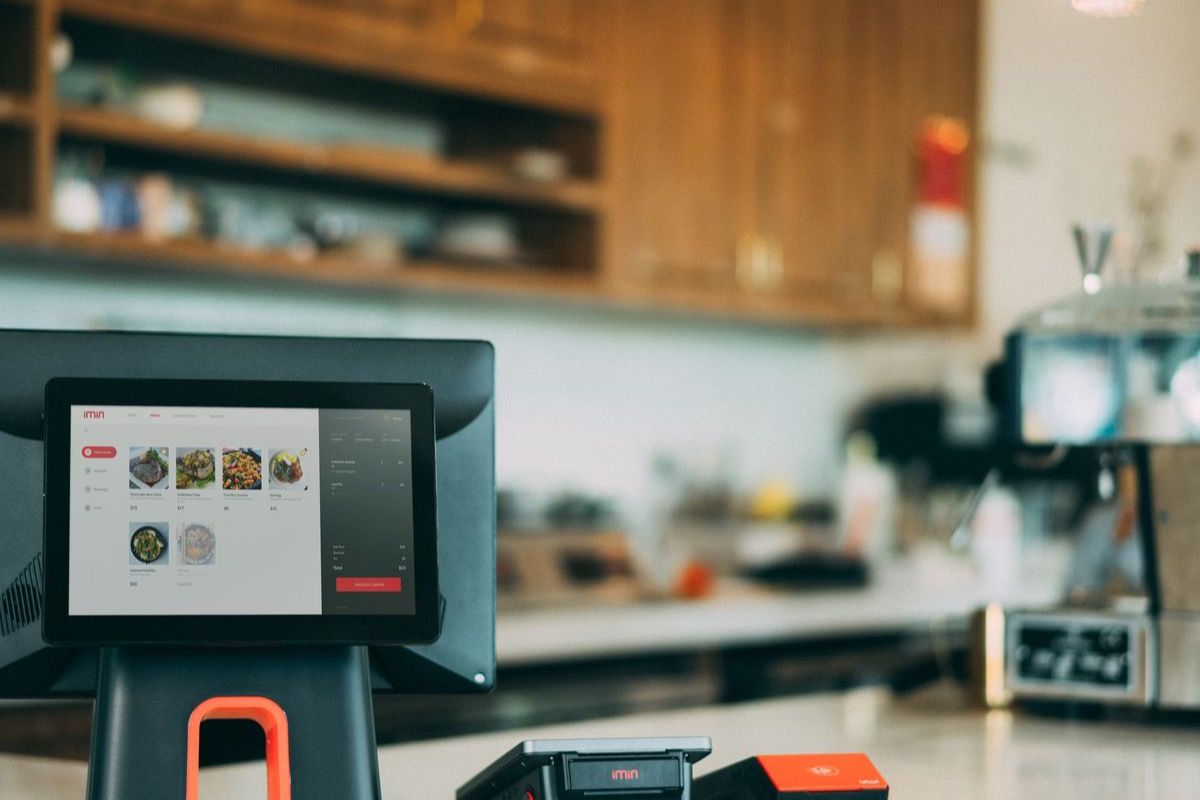
The guest reads the menu in their own language, sees the photo, sees the price with tax and tip guidance, taps, pays. The order lands in the kitchen as structured data. No transcription, no handwriting, no shouting across the line.
The Second Cost Nobody Tracks: Rework
Illegible tickets don't just slow you down. They cost you food. Most operators put remakes and comps somewhere between 1% and 3% of covers, and the real cost of a remake is roughly three times the plate — the food, the labor, the delay it puts on every other ticket, and occasionally the review.
At 300 covers a night and a $42 average check, even 1% rework is $126 a night in pure loss, plus the ripple. Every one of those is a ticket that was misheard or miswritten, not a kitchen that can't cook. Digital orders don't get misheard.
What the Server Does With the Time
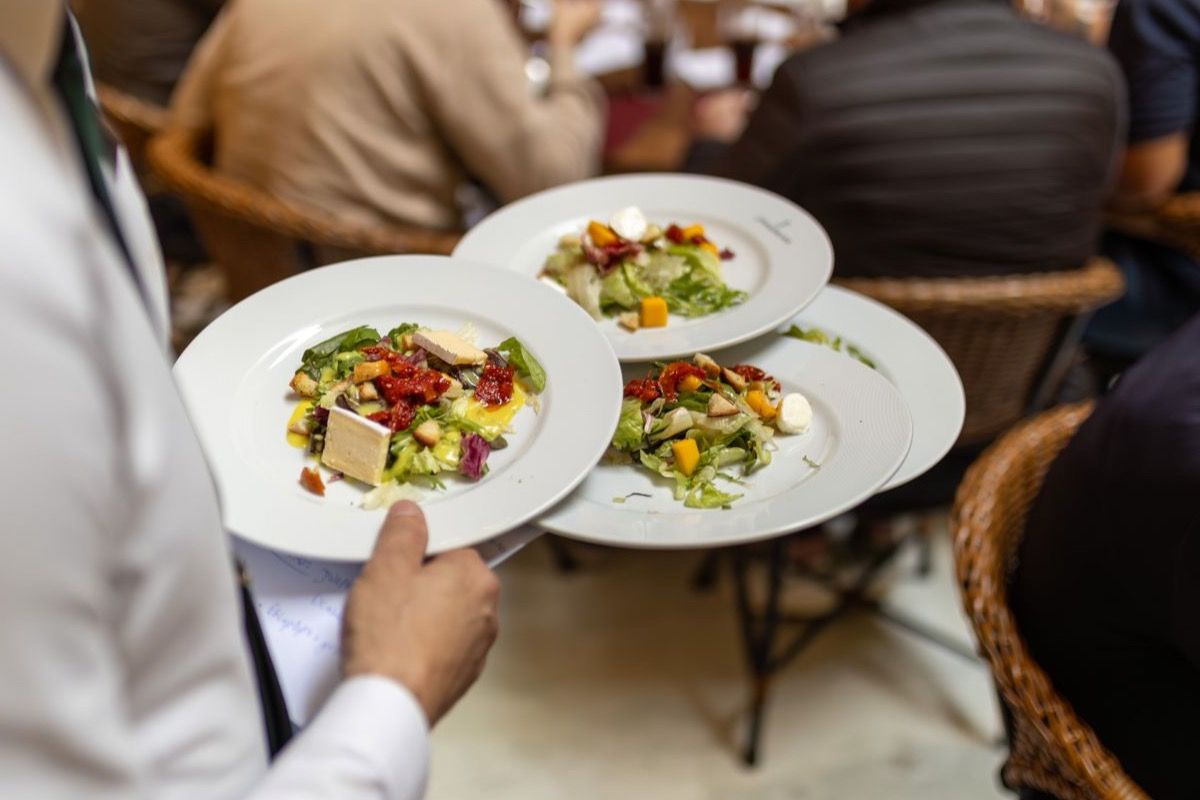
This is the part that changes the culture of a room. When the transactional work moves to the phone, the server stops being an order-entry clerk with a tray and starts doing the job that actually generates revenue and loyalty: reading the table, recommending the second glass of wine, catching the kid who's about to melt down, noticing the birthday, refilling water before it's asked for.
The Chicago operator put it plainly: "My best server got better. She was spending her night typing. Now she's on the floor."
And it changes who you can hire. When the job no longer requires memorizing a 60-item menu and translating it verbally for every guest, you widen the pool — new hires ramp in days instead of weeks, and language stops being a barrier to hiring good people who happen to not be native English speakers.
Why This Isn't About Replacing People
Let me be direct about the uncomfortable version of this argument, because it's the one that gets repeated in comment sections and it's wrong in a specific way.
QR ordering removes tasks, not roles. It removes the walking, the scribbling, the card-run, the menu recitation. It does not remove the greeting, the reading of a table, the recovery when something goes wrong, or the reason a guest comes back. Those are the parts of hospitality that no screen has ever replicated, and they are exactly the parts your best people want to spend their time on.
The restaurants that cut headcount to the bone and left guests with a QR code and nobody to talk to got exactly what they deserved: lower checks, worse reviews, and a room that feels like a vending machine with tables. The technology only pays when it buys your people time to be people.
The Honest Limitations
QR ordering is not a universal solvent, and any vendor who tells you otherwise is selling, not advising.
Allergy and dietary questions still need a human, and should. A guest with a shellfish allergy needs a person who can walk to the kitchen, not a filter on a screen. Keep printed menus for the guests who want them — not as a fallback for failure, but because some people simply prefer paper and that's fine. And the integration matters more than the interface: if your orders don't land in the kitchen printer or KDS automatically, you've added a tablet and a step, not removed one.
The pilot also has to be honest about what it can't fix. If your kitchen is the bottleneck, faster ordering will just make the wait at the pass worse. Fix the pass first, or run QR ordering on the slower dayparts while you do.
What to Measure in the First 30 Days
Don't measure "guest satisfaction." Measure these four, weekly, against your own baseline:
1. Seconds from seated to order submitted. This is the single clearest signal the system is working.
2. Table turn time, by daypart. If it doesn't move in four weeks, your bottleneck is elsewhere.
3. Remakes and comps as a percentage of covers. This one usually drops first and fastest.
4. Covers per labor hour. This is the number your payroll actually cares about.
A 60-seat room that gains 17 covers a night at $42 does roughly $21,000 a month in incremental revenue. QRfood starts at $199 a month. The math isn't subtle.
The Bottom Line
Labor is not getting cheaper or more available. The BLS numbers through 2028 say so, your Friday nights say so, and your payroll spreadsheet says so. You cannot hire your way out of a structural shortage, and you cannot keep absorbing it with the same three people forever.
What you can do is stop paying your servers to be order-entry clerks. Give them the transactional work back to the guest, and give the guest a menu they can read, in their language, with photos and prices, in under a minute.
That is the whole trick. Not fewer people — more effective hours from the people who showed up.
Start a free trial at qrfood.ai. Scan. Order. Serve. And put your best server back on the floor.