Stop Paying $2,000 a Year for Menu Translation — QRfood Does It Free
It was a Tuesday afternoon in Miami's Calle Ocho when Maria walked me through her menu budget. She runs a tapas bar where roughly 35% of customers are Spanish-speaking and a growing number are Portuguese-speaking tourists. "Every quarter, I send my menu to the translation agency, and every quarter, I get a bill that makes me wince," she said. "And somehow the menu still isn't right."
Maria's story isn't unique — it's the quiet tax that multilingual restaurants pay every single year. If your restaurant serves customers in more than one language, you're probably overpaying for translation. Let me show you exactly where the money goes, and why a growing number of operators are cutting this expense to zero.
The Real Price of a "Simple" Translation
Here's Maria's math. Her local translation agency charges $0.12 per word. Her menu runs about 1,200 words. That's $144 per translation job — before anything else happens.
But translation is never just translation. The Spanish version of her menu text runs about 25% longer than the English original, which means the layout has to be redesigned. Her designer charges an additional $200 per layout adjustment to accommodate the expanded text. Then there's the proofreading round — another $60 — because one mistranslated ingredient ("cacahuete" instead of "maní" for peanut) could confuse customers and, worse, trigger an allergy incident.
One menu update across two languages: $404. She does this quarterly. That's $1,616 per year — and she's only covering two languages.
For a trilingual restaurant handling English, Spanish, and Mandarin? You're easily looking at $2,000+ annually on translation and bilingual layout costs. And that's before you factor in the two-week turnaround time from your agency, during which your menu is already outdated.
The Costs That Never Appear on the Invoice
The invoice line items are only half the story. The hidden costs are worse.
⏱️ The 2-Week Lag. Your agency takes up to two weeks to return a translation. By the time the new menus arrive, your seasonal specials have already changed. You're paying for a menu that's outdated on arrival.
⚠️ The Mistranslation Risk. One wrong word in an allergen description isn't a typo — it's a liability. A "peanut" translated as "cacahuete" instead of "maní" might be technically understood, but in the wrong dialect it's confusing, and confusion in food allergy territory is dangerous.
🌍 The Static Paper Problem. Even after paying all that, your paper menu is still static. A Japanese tourist walks in next week, and your menu doesn't speak their language at all. You've paid thousands for two languages — and you still can't serve the tourist standing at your door.
What "Free" Actually Looks Like
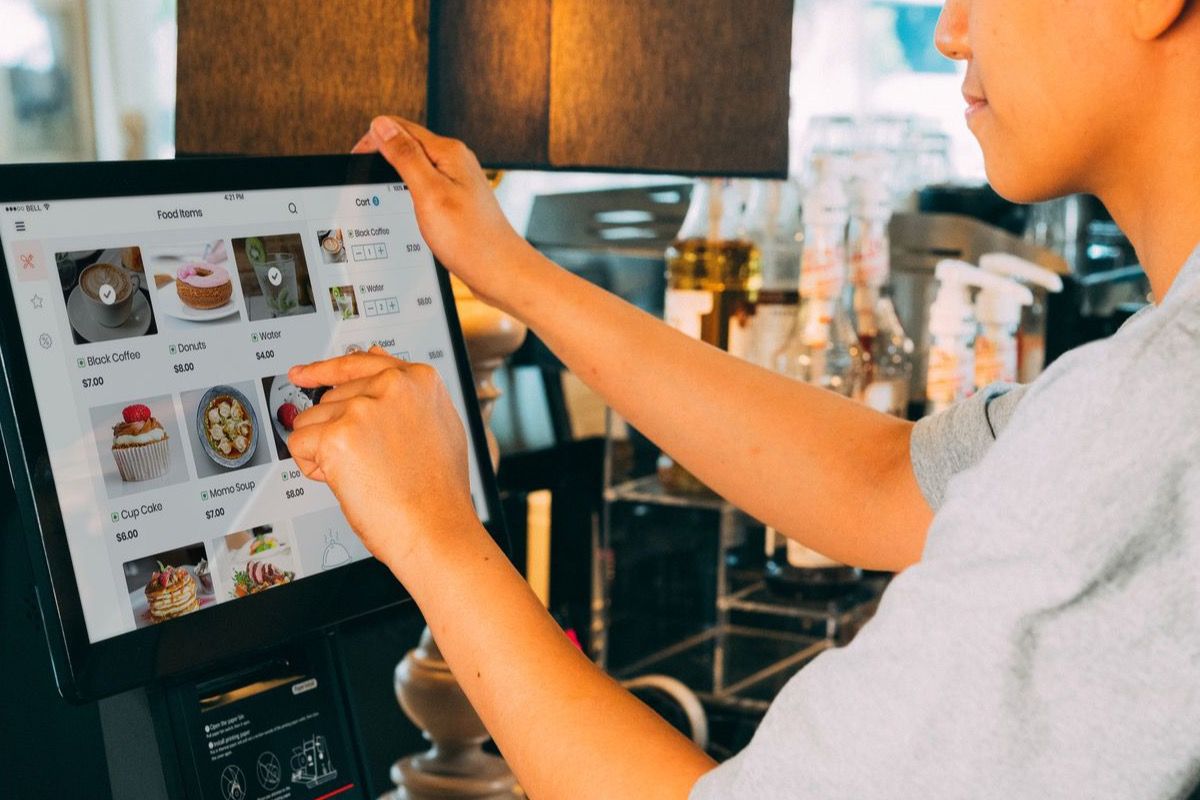
QRfood eliminates this entire expense category. The platform supports real-time multi-language menus built directly into the QR ordering experience. Customers scan the code and choose their language from a dropdown — Japanese, English, Spanish, Korean, Mandarin, French, and more.
Everything is managed from a single dashboard with built-in translation tools that remove the agency middleman entirely. When Maria updates her menu in English, every language version updates instantly. No layout redesigns. No proofreading rounds. No two-week waits. No invoices.
The Proof: 500+ Restaurants in Japan
This isn't a theory. Over 500 restaurants in Japan — a country where high-quality menu translation is an absolute necessity for the tourism industry — have already made the switch. Collectively, they've saved more than $800,000 in translation fees that used to go to agencies.
Think about that number: $800,000 that used to leave restaurant budgets and flow into agency invoices. Now it stays in the business — funding better ingredients, better staff, better everything.
Run the Menu Math on Your Own Restaurant
Pull up your last translation invoice and run the numbers:
• What's your cost per word, and how many words is your menu?
• How many languages do you actually need — and how many do you actually maintain?
• How often do you update the menu, and how often does the translation arrive late?
• What's the layout cost every time a language runs longer than English?
For most multilingual operators, the annual total lands between $1,500 and $3,000 — money spent on a static document that still can't speak to every customer who walks in.
Your Menu Should Speak Every Language Your Customers Do
The best operators I know think of the menu as their hardest-working salesperson. It works every shift, it sets expectations, and it either invites people in or sends them away. A menu that only speaks one language is a salesperson who only serves one customer in five.
With QRfood, your menu speaks every language your customers do — and your budget doesn't suffer for it. Real-time updates, built-in translation, zero agency fees. That's not just a saving. It's a competitive advantage your competitors are still paying for.
Try QRfood for free at qrfood.ai. Your customers will read you in their language. Your accountant will read the savings in yours.