Our Average Check Rose $4.50 in Three Weeks. We Only Changed the Photos.
I run a Greek restaurant in Astoria, Queens. Forty-four seats, twenty-five items, and laminated menus that have been wiped down so many times the plastic has gone soft at the corners. For four years our average check sat between $22 and $24. I blamed portions. I raised prices twice. Nothing moved.
The problem was never the food and it was never the price. It was that our menu was a list of words. "Grilled Octopus — $14." "Lamb Gyro Platter — $16." Accurate, and completely silent. A guest who has never eaten saganaki does not know what they are missing, and a hungry guest at 8:40 on a Saturday is not going to ask three questions to find out.
A menu without photos asks guests to imagine dinner
Operators talk about menu engineering like it is arithmetic — stars, plowhorses, puzzles, dogs. But before a guest can react to a price, they have to want the plate. Text gives them nothing to want. Read a text-only menu in the language of appetite and you get a spreadsheet.
I watched this happen at table 12 for years. Two people, one shared appetizer, two entrées, one dessert with two forks. Twenty-three dollars a head. Nobody was being cheap. They were being careful, because they could not see what they were buying.
The setup took four minutes, not a weekend
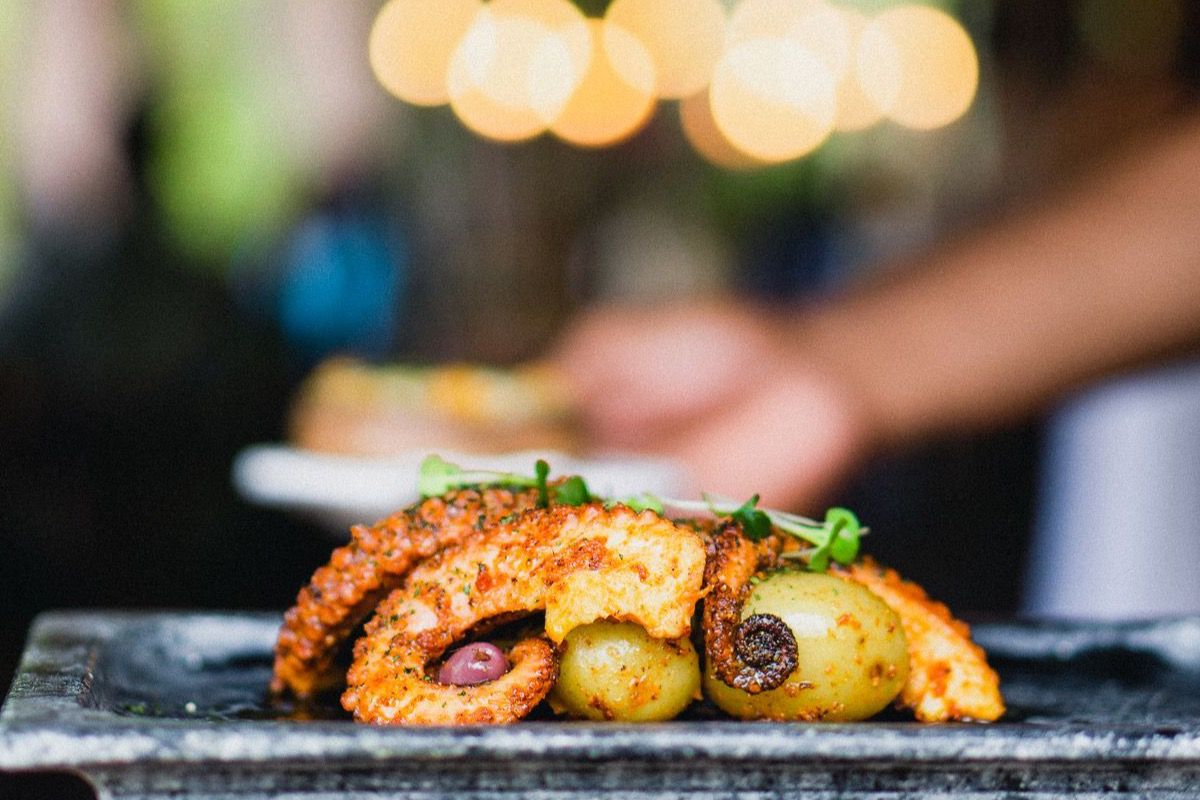
I photographed ten dishes with my phone during prep, standing next to the window because that is where the light is. No light box, no styling, no photographer. The lamb gyro on a plate. The octopus with lemon. Saganaki still flaming. Baklava with the honey pooling at the edge.
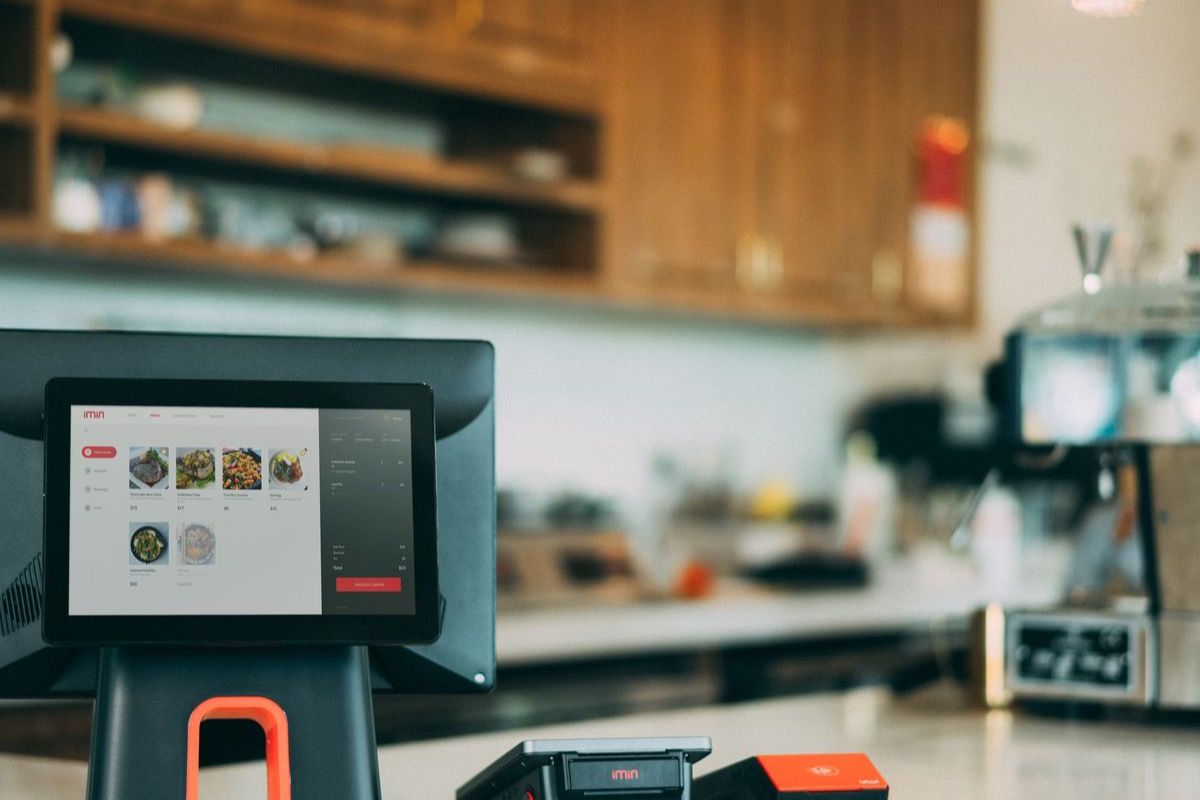
Then I typed twenty-five items into qrfood — name, price, one line of description, photo — picked the Greek template, and published the code onto the table tents. The whole thing took about four minutes, and most of that was texting photos to myself because I had shot them on my phone and needed them on the laptop.
Total cost: zero. No designer, no printer, no reprint cycle. That last part mattered more than I expected. We used to wait ten days and pay $180 every time we changed a price, which is why our printed menu still had a lunch special from 2023 on it.
Week 1: $26.20. Week 2: $27.10. Week 3: $27.80.
I assumed week one was a fluke. A wedding party, good weather, a holiday weekend. Week two held. Week three held, and by then the servers were telling me things I had not asked about: everybody orders the saganaki now; tables order two desserts instead of one.
The $4.50 did not arrive evenly. It came from three places.
Appetizers. Our attach rate roughly doubled. The tzatziki-and-pita photo does the selling, and nobody has to describe it at a table where four people are talking over each other.
Dessert. Up about forty percent. A picture of baklava with honey running off the corner is a decision made in two seconds, at the end of a meal, when nobody is hungry enough to argue.
The high-margin plates. Guests stopped defaulting to the cheapest thing they recognized and started ordering the octopus. That is the part no discount ever did for us.
Why a photo moves the check and a description does not
Three things are happening here, and none of them are magic.
Recognition replaces translation. Half our guests are not Greek-food experts. A photo of octopus with char marks answers "what is it, how big is it, is it fishy" in one second. A sentence answers it in four questions, and most guests will not ask four questions.
Desire arrives before arithmetic. Appetite is visual. A guest who is already hungry for a specific plate compares that plate to its price. A guest who is reading a list compares prices to each other. Same menu, same kitchen, two completely different conversations.
The photo sets the anchor. When the $16 gyro platter has a photo and the $28 lamb chops do not, the platter becomes the reference point. Guests trade up from a visible anchor. They trade down from a blank one.
What we did not change
No price increases. The same twenty-five items. The same kitchen, the same three cooks, the same two servers on a Friday. No professional photography either — these are iPhone shots taken in daylight, slightly uneven, and that is part of why they work. Guests trust a plate that looks like it came out of a kitchen, not out of a studio.
The only other change was discipline: we update the photo when a dish changes. A picture of last summer's tomato plate in January is worse than no picture at all.
The math, in the least flattering version
Eighty covers a night at $4.50 is $360. Six nights a week is $2,160. Fifty weeks a year is $108,000. I do not believe all of that is new money — some of those guests would have ordered a dessert anyway, and some of the lift is regulars who simply traded up. Call it half. Fifty thousand dollars a year from a menu that costs nothing to run is still the best return I have ever gotten on four minutes of work.
It is also worth being precise about what moved. Our check average did not rise because we pushed more food at the same people. It rose because guests ordered what they actually wanted instead of what they could identify. Those are different businesses, and only one of them feels good to run.
Where photos will not save you
A bad photo is worse than no photo. Yellow overhead light, a blurry plate, a half-eaten entrée — that tells a guest the kitchen does not care, and it costs you the table's trust before the food arrives. If you cannot shoot it in daylight on a clean plate, wait until you can.
Photos do not fix a weak dish. They accelerate the verdict. Great dishes get ordered more, mediocre ones get ordered once, and now you know which is which.
And allergy questions still need a person who can walk to the kitchen. A photo sells the plate; it does not answer whether the tzatziki has dairy in it.
The three-week test
Pick your ten highest-margin dishes. Photograph them on a table by the window before service. Put them on a QR menu and keep paper for whoever asks. Then watch three numbers for three weeks: average check, appetizer attach rate, desserts per table.
If nothing moves, your problem really is the food, and now you know that too. In our case the food was fine. It just had no way to say so.
qrfood.ai. Four minutes to set up, free to start, no photographer required. Your food already looks good — let it do the talking.