Korean Tourists Are Coming. Your English-Only Menu Is Sending Them Away.
The first thing I noticed was that they never sat down.
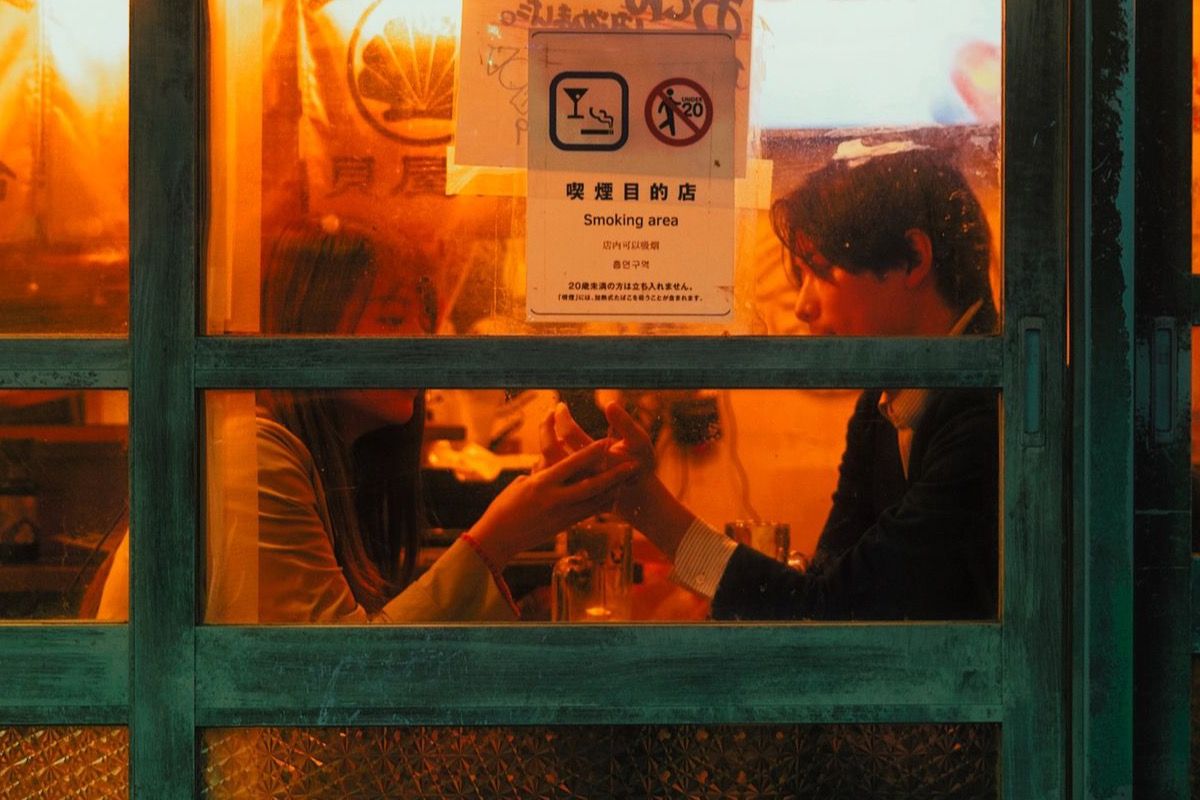
Saturday, 6:40 p.m., Midtown Manhattan. A group of six stopped outside a 70-seat American bistro two blocks from the hotel district. One of them — the youngest, by the look of it — held up a phone and started translating the menu taped inside the window for the other five. There was about forty seconds of quiet murmuring. Then the whole group turned and walked east, toward 32nd Street, where the signs are in Korean.
I was there to meet the owner, Christina, about something else entirely. But I asked her about the group on the sidewalk before we talked about anything on my list.
She already knew. "That happens four, five times a week now," she said. "They stand there, they read the window, and they leave. I used to think it was the prices."
It was not the prices.
The Largest Inbound Travel Market Nobody in the Kitchen Is Talking About
South Korea sends more than 1.2 million visitors to the United States in a normal year. In New York City alone, Korean arrivals have climbed past 230,000 annually — one of the fastest-recovering inbound markets in the city, and one that skews young, mobile-first, and extremely online.
They are also, per trip, some of the highest-value guests walking into an American restaurant. Average spend runs around $4,500 per trip, and dining is the second-largest expense category after lodging. A Korean traveler does not treat dinner as fuel. Dinner is the content.
And here is the part that should worry every independent operator in a tourist corridor: they research restaurants before they board the plane, they research in Korean, and they arrive expecting to understand what they are ordering.
They Found You. They Just Cannot Read You.
Korean travelers are among the most research-heavy diners in the world. Restaurant choice gets planned weeks ahead, in Korean-language Naver blogs, in YouTube vlogs, in group chats with friends who visited last year. By the time a group of six walks past your window, they have usually already seen your food — on someone else's camera.
Which means the failure point is almost never discovery. It is the last three feet.
A menu that exists only in English asks a Korean guest to do translation work at the exact moment they are hungry, standing up, and negotiating with five other people. Some will try. Most will not. They will walk to the place where the menu already speaks their language, and they will tell their group chat that your restaurant looked nice but was hard to order at.
The Math on a Table of Six
One walking group of six at $38 a head is $228 in revenue. Two seatings like that a night is $456. Forty such groups a month — a conservative number in Midtown — is north of $18,000 a month walking past the door.
Christina did the arithmetic with me on a napkin and then stopped talking for a moment. "That is my payroll," she said.
Restaurants in tourist-heavy districts that offer Korean-language menus report capture rates from Asian tourist demographics running 15% to 25% higher than neighbors that do not. Not because the food changes. Because the decision gets easier.
What Korean Guests Actually Ask at the Table
This is the part that separates a real solution from a Google Translate screenshot. Four questions come up at nearly every Korean table in an American restaurant:
1. What is actually in it? Not the name — the ingredients. Korean diners read menus closely and expect an ingredient list they can trust, especially around pork, beef, and shellfish.
2. How spicy is it? "Spicy" on an American menu is meaningless. Is it gochujang-hot, black pepper-hot, or hot sauce on the side? Say which.
3. Is this enough for sharing? Korean dining is built around shared plates. A guest needs to know whether the portion is one person or the table.
4. Does it come with rice or noodles? In Korean food logic, a main dish without a starch is an incomplete meal. If your entrée is protein-only, say so — and say what to order alongside it.
Answer those four on the menu, in Korean, and the table goes quiet in the good way. The staff stops answering the same four questions sixty times a shift.
Translation Is Not Localization
A translated menu tells a guest what a dish is called. A localized menu tells them what it tastes like.
"Buffalo wings" rendered phonetically into Korean Hangul is still a mystery. But "spicy-sweet fried chicken wings with a blue cheese dip — closest thing on our menu to yangnyeom chicken" is an order waiting to happen. One string of text does translation. The other does the selling.
The same rule applies in reverse for the things Korean guests assume and Americans do not. Banchan does not come free here. Water is tap unless you ask. Tipping is expected. Nobody will bring you a shared rice bowl unless you order it. Those three lines of expectation-setting, written in Korean, prevent more awkward tables than any amount of staff training.
What Christina Changed — and What It Cost
She did not hire a Korean speaker. She did not reprint anything. She did not change a single dish.
She put a QR code on the window, next to the paper menu, with a small line in Korean underneath: 한국어 메뉴 있습니다 — "Korean menu available." Then she built the Korean version of her existing menu inside a QR menu system, wrote descriptions that answered the four questions above, and added photos of the six dishes she most wanted to sell.
Total time: one afternoon. Total printing cost: zero, because nothing was printed.
Ninety Days Later
Korean-language menu views at Christina's bistro averaged 210 a week. Groups of four or more went from 31% of covers to 44%. Average ticket in those groups rose from $34 to $41 — not because she raised prices, but because a table that understands the menu orders the appetizer, the second round, and the dessert.
The most surprising number was the one she did not expect: her English-speaking regulars started using the QR menu too. Better descriptions sell to everybody. A guest who knows what "charred broccolini with chili crisp and lemon" actually means orders it more often than a guest staring at three words.
Three Things You Can Do This Week
1. Put a line in Korean on your window or door — even a handwritten one. It costs nothing and it converts people who are already standing outside your restaurant deciding.
2. Add Korean to your QR menu, not to your printed menu. Printed menus cannot be updated, cannot carry photos cheaply, and cannot be read by a guest standing on the sidewalk in the rain.
3. Write descriptions for your ten best-selling dishes that answer: what is in it, how spicy, how big, and what it resembles. Thirty words each. That is the entire project.
Why This Window Is Open Right Now
Korean tourism to the US is still climbing back, and the travelers arriving now are the ones who plan hardest and spend most. In two or three years, the restaurants that offer Korean menus in tourist districts will be the default choice, and everyone else will be the place people "couldn't figure out."
That is the whole competitive window. It is not about being the best restaurant on the block. It is about being the one a group of six can read.
The Menu Should Not Be the Hardest Part of the Meal
QRfood was built for exactly this. Upload your menu once — dish names, prices, photos, descriptions — and publish it in Korean, Japanese, Chinese, Spanish, and more. Not machine translation of your English, but readable explanations in each language, written to answer the questions guests actually have.
Change a price, add a seasonal dish, mark something sold out. One edit updates every language at once. No reprinting, no stickers, no staff member memorizing which dish changed this month.
Christina put it best, and I wrote it down: "I did not get a new restaurant. I just finally got read."
Your menu is already good. Make sure the six people outside can tell.
Start free at qrfood.ai — scan, read, order, in any language.