What 500 Tokyo Restaurants Taught Me About QR Menus
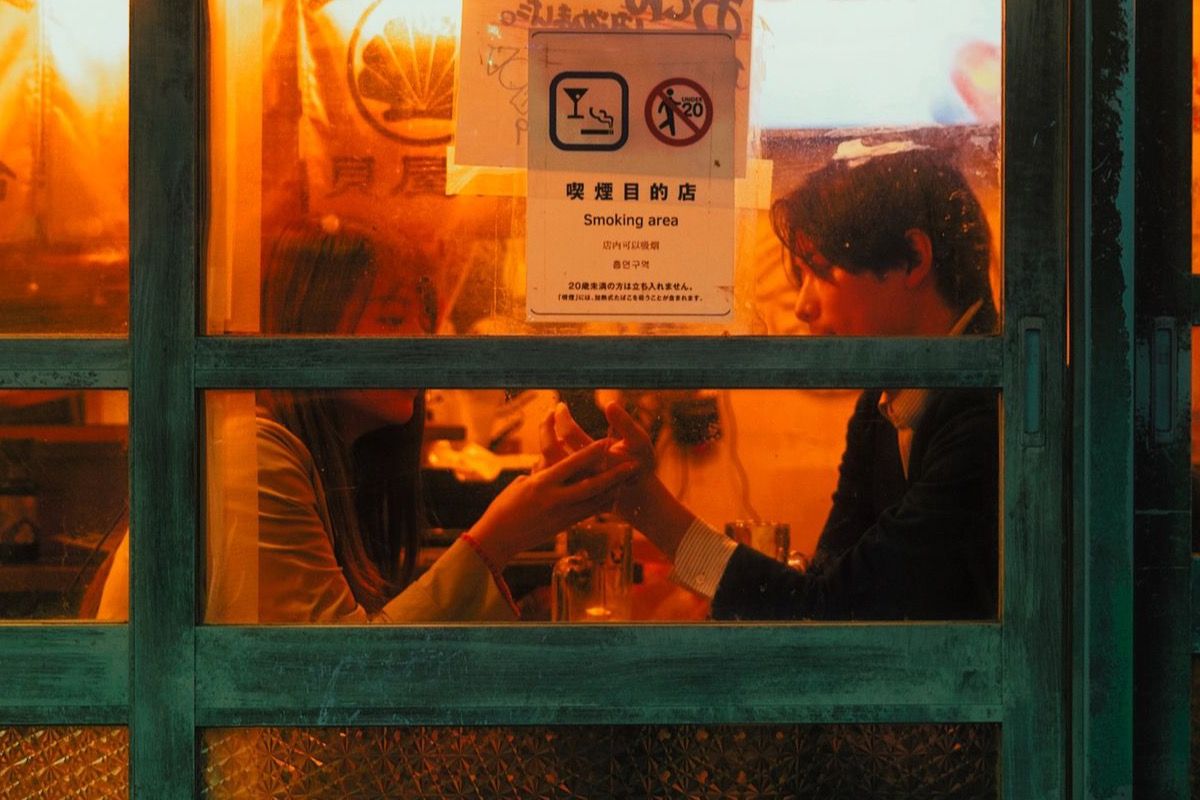
I went to Tokyo expecting to prove QR menus were a gimmick. Three nights in, standing in a six-seat izakaya in Shinjuku, I watched a table of four order eleven dishes — gyoza, sashimi, two rounds of highballs — without a single word to the staff. The owner never left the counter.
Later, through a translation app on my own phone, I asked him why he had switched. His answer was shorter than I expected. "My regulars hate waiting. My foreign customers hate guessing. This fixes both."
The Most Conservative Dining Culture on Earth Said Yes
If you have spent any time in Japanese restaurants, you know the reputation. Dashi recipes unchanged for thirty years. Kissaten that still serve the same blend they served in 1978. Ryokan inns with paper ledgers and handwritten receipts. This is not an industry that chases technology for the sake of appearing modern.
So when I learned that more than 500 Japanese restaurants are running on QRfood, with adoption rates above 85% and customer satisfaction scores measurably higher than the paper-menu tables, my first instinct was to look for the catch. There had to be one: a subsidy, a novelty effect, a demographic that skews young.
There was not. What I found instead was a pattern that American operators keep missing. These restaurants did not adopt QR menus because they are innovative. They adopted because the menus were failing at three specific jobs, and the technology fixed all three without asking anyone to change a recipe.
The Numbers That Changed My Mind
The operating data from those 500+ restaurants is unusually consistent, which is what makes it credible. Different cities, different price points, different cuisines, same result:
⏱️ Tables turn 3.7 minutes faster on average. Not because guests are rushed, but because the dead time between "we are ready to order" and "someone notices we are ready" disappears.
✅ Order accuracy climbs above 98%. Modifications — no wasabi, no cucumber, sauce on the side, split the rice — arrive in the kitchen as structured text, not as a server's memory of a conversation held over a noisy room.
🌍 Multilingual service becomes automatic. English, Chinese, Korean and Japanese menus coexist behind a single code, with no dependence on which staff member happens to be on shift.
📈 Guest satisfaction scores run higher than at paper-menu tables. That is the number I did not expect. Guests do not merely tolerate the digital menu; they rate the experience better.
Why It Works: Three Frictions, Not One
Most American operators think of a QR menu as a way to save on printing. That is the smallest of the three problems it solves.
The first friction is language. Japan is managing record inbound tourism with a labor market that cannot staff five languages across every shift. A paper menu in Japanese only serves the guests who already live there. A QR menu serves everyone at the same table, at the same time, in their own language.
The second friction is ambiguity. "No wasabi" spoken across a loud counter can become "extra wasabi" in a busy kitchen. Written into an order, it cannot. In a culture that treats precision in food as a matter of professional pride, that reliability is not a convenience — it is quality control.
The third friction is timing. The most expensive seconds in a restaurant are the ones a guest spends waiting for permission: to order, to order a second drink, to ask for the check. A QR menu removes the wait for attention without removing the hospitality. The staff still greet, still recommend, still pour. They simply stop being a bottleneck.
What Tokyo Operators Actually Complained About
This is the part that made the data believable to me, because it was not a pitch. When I asked owners what went wrong, the answers had nothing to do with the software.
They complained about their own first drafts. One owner uploaded his paper menu unchanged — forty-one items, no photographs, descriptions copied from a distributor catalog. It performed badly, and he blamed the QR code for a month before admitting the menu itself was the problem. He cut it to twenty-three items, shot photos on a phone against a white wall, rewrote every description in one plain sentence, and his average ticket rose 14% without a price change.
They complained about the first two weeks of staff behavior, not the technology. Servers kept apologizing for the QR code, which taught guests to be suspicious of it. The fix was a single sentence at the greeting — "the full menu with photos is on the code, and I am right here if you want recommendations" — and the apologizing stopped.
And they complained, briefly, about older regulars. Every operator I spoke with solved it the same way: five printed menus kept behind the counter, offered without ceremony to anyone who wants one. No announcement, no debate. The digital menu is the default, not a mandate.
What Transfers to an American Restaurant — and What Does Not
Three things transfer cleanly. First, the discipline of cutting the menu. A QR menu that mirrors a ninety-item paper menu is a worse experience than the paper. Second, one honest photograph and one plain-English sentence per signature item. Third, structured modifications and allergen tags, which reduce both errors and the questions that slow down a counter.
Two things do not transfer directly. Japanese diners are comfortable paying at the table through the phone; American guests still expect a check presenter, split checks and a tip line, so the payment flow has to be designed for this market rather than copied. And older American buildings have dead zones — a QR menu that fails in the back booth is worse than no QR menu at all, which is why the printed backup is not a compromise but a requirement.
In practice, I have seen QR ordering pay for itself fastest in three specific positions: the host stand, where a waitlist link keeps guests from drifting away; the bar, where a second round gets ordered without flagging anyone down; and the counter-service line, where a guest who reads while waiting arrives at the register already decided.
The 30-Day Rollout I Would Copy
Week one: audit, then cut. Count your items. If a section has more than twelve, the menu is doing the kitchen's inventory work instead of the guest's deciding work. Photograph your twelve bestsellers — phone camera, daylight, no filters.
Week two: write. One plain sentence per item that says what it is, how it is cooked, and what it tastes like. Add allergens. Add modification chips for the four requests you hear every night.
Week three: place. Put the code where decisions happen — window, table tent, receipt, door — not only on a single laminated sign by the register. Give staff one sentence to say, and make sure it does not apologize.
Week four: measure three numbers against your baseline — average ticket, table turn time, and order errors. If none of the three moved, the problem is the menu content, not the code.
The Real Lesson From Tokyo
Conservatism is not the enemy of technology. Bad technology is. The restaurants that said yes in Tokyo did not do it because QR codes are modern. They did it because the code removed three specific frictions — language, ambiguity, timing — without touching a single recipe, a single knife, or a single standard they had spent decades protecting.
That is the test worth applying in your own restaurant. Not "is this innovative," but "which friction does this remove, and what does it cost me in standards?" If the answer is three frictions and nothing in standards, the most conservative operator in the room should be the first to adopt it.
Five hundred restaurants in the world's most demanding dining market already ran that test. The same system, the same flow, the same reliability is available to American operators today.
Start free at qrfood.ai. Keep the recipes. Remove the friction.