Jersey City Has Half a Million Filipino Stories — and Almost No One Could Read Them on a Menu
Newark Avenue in Jersey City looks like any other American main street until you notice the signs. Jollibee. Max's Restaurant. A dozen small turo-turo counters where the food sits behind glass and you point at whatever looks good. This is the third-largest Filipino community in the United States — roughly 500,000 people across New Jersey — trailing only Los Angeles and Honolulu.
And yet, in a city where 60% of residents speak a language other than Tagalog at home, the menus on those counters were written for people who already knew what sisig was.
That gap — between a neighborhood's food culture and everyone else's ability to order it — is one of the most expensive problems in ethnic restaurants. It cost one Jersey City owner customers she never even knew she lost.
The "Just Give Me Chicken Adobo" Problem
Last month I sat down with Lita, who has run a family turo-turo spot on Newark Avenue for 19 years. She calls her regulars by name and remembers how they take their coffee. But she carried a frustration she couldn't shake.
"Non-Filipino customers come in, look at the menu, and say 'just give me chicken adobo,' ... They don't know what sisig is. They don't know what kare-kare is. They don't ask. They just leave."
Lita wasn't guessing. She was describing a measurable pattern. A 2023 study of ethnic restaurants in multi-ethnic neighborhoods found that 54% of non-co-ethnic customers will leave — or never order beyond a single safe item — if they can't understand more than half the menu. Not because the food is unappealing. Because they're embarrassed to ask.
That is the cruel part. These guests weren't rejecting Filipino food. They were rejecting the discomfort of not knowing what to ask for. In a neighborhood as diverse as Jersey City — where you can find Indian, Dominican, Egyptian, and Vietnamese kitchens within four blocks — that discomfort quietly caps how many people ever walk through the door a second time.
What 54% of Menu Blindness Actually Costs
An ethnic restaurant that converts only one in ten non-co-ethnic walk-ins isn't unlucky. It is leaving money on the table every single night.
Run the math on a modest 40-cover dinner service. If 15% of your guests come from outside your community and each spends $22, that is about $132 a night. Lift that share to 40% — a realistic shift once guests can actually read the menu — and you are at $352. That is $220 a night, roughly $80,000 a year, from the same room, the same kitchen, and the same recipes.
Lita didn't need a new concept. She needed her menu to speak English as clearly as it spoke Filipino.
One QR Code, a Few Afternoons, and a Different Room
Her fix was almost anticlimactic. She added a QR code menu with an English description for every single dish — plus a photo. Not a translation, an explanation of what the dish actually is.
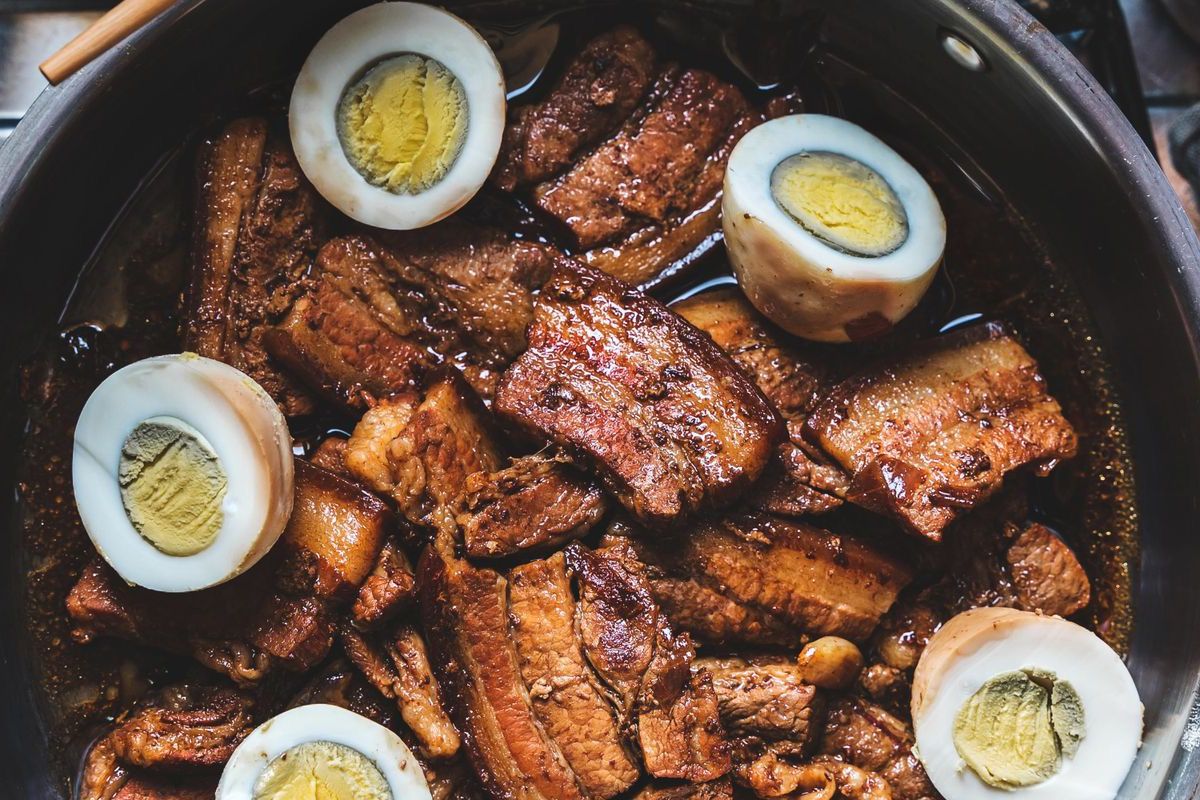
Crispy pata became "deep-fried pork knuckle with a garlic soy dip." Sinigang became "tamarind-sour pork soup with vegetables — tart and refreshing, the Filipino cousin of tom yum." Sisig became "sizzling chopped pork with citrus and chili, served on a hot plate."
Then she did the part most owners skip: she trained her staff to say one sentence. "Scan the code and you'll see what everything is."
Six months later, her non-Filipino customer base had grown from 15% to 40% of sales. Sisig — the dish nobody would order — became her second-best seller, right behind adobo.
"When they see 'deep-fried pork knuckle, garlic soy dip,' they get it," she told me. "They order it."
Why This Works Better Than Translation Alone
Most owners think the problem is language. The real problem is context.
A word-for-word translation of "kare-kare" is still "kare-kare." What turns a curious guest into an ordering one is a description that lets them picture the food: what it tastes like, how it arrives, whether it is spicy, whether it is a meal or a snack.
That is the design principle behind QRfood. Every dish gets a plain-language description, a photo, and optional allergen tags — in whatever language your guest actually reads. Scan, translate, publish. It is a five-minute setup, not a rebrand.
Lita didn't wait for a consultant or a redesign. She published descriptions from her phone during one slow Tuesday afternoon.
The Neighborhood Is Already Telling You This
Jersey City isn't an edge case. It is a preview.
Roughly 40% of Americans under 30 now live in census tracts that are majority non-white, and food-driven travelers actively hunt for authentic neighborhood spots they have never tried. Demand for Filipino food — lechon, sinigang, ube desserts — is climbing from Los Angeles's Historic Filipinotown to Newark Avenue.
The bottleneck is rarely the kitchen. It is the first 30 seconds at the table, when a guest holds a menu they can't decode and quietly decides to play it safe — or to leave.
What Any Ethnic Restaurant Can Steal From Lita
• Describe, don't just translate. "Tamarind-sour soup" beats "sinigang" for a first-time guest.
• Photograph every dish. Guests order with their eyes before they order with their vocabulary.
• Put your sleeper hit behind a clear name. Sisig became a top seller once guests knew it was crispy pork with citrus.
• Make the menu multilingual by default. Your guest may read English, Spanish, or Tagalog first.
• Update in minutes. Specials, sold-out items, and seasonal dishes change instantly — no reprinting.
Your Sinigang Won't Sell Itself
Lita's story isn't exceptional. It is repeatable. The food was always worth ordering — the menu simply never gave guests permission to be curious.
If your neighborhood is more diverse than your dining room, that gap is revenue waiting to be collected. Close it.
Start free at qrfood.ai. Scan, translate, publish — and let the next guest order something better than chicken adobo.