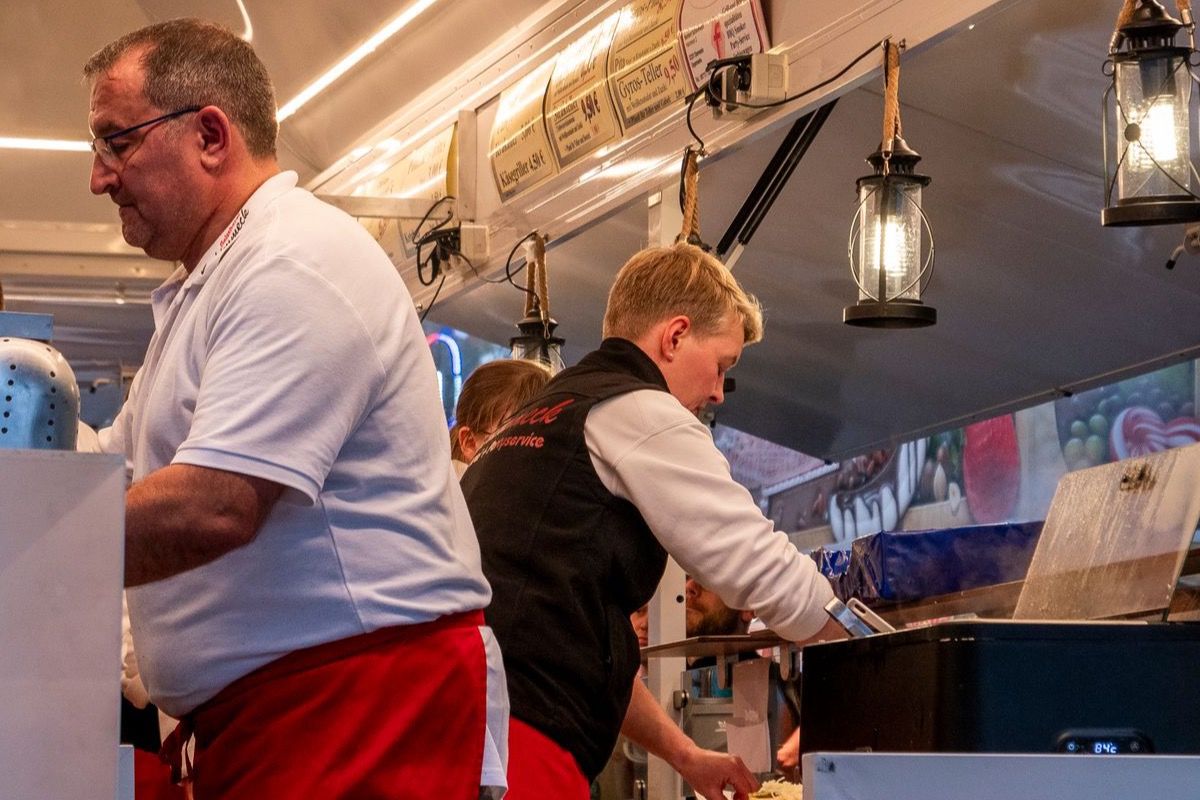
From Whiteboard to QR Menu: How a Portland Food Truck Digitized in Two Minutes (2026)
My name is painted on the side of a 14-foot step van in Southeast Portland: Bao Down. For three years, my entire menu lived on a whiteboard I propped against the serving window every morning. Hand-written specials, a smudge where the pork buns were, and a price I crossed out and rewrote whenever pork belly moved.
It looked exactly like what it was: a one-person operation held together by grit and a dry-erase marker. I kept telling myself a "real" menu system was a luxury I could not afford. Then a customer changed my mind in a single sentence — and I had a QR menu live before my first customer of the day.
The 6 AM Math Nobody Warns You About
Food truck margins are thin by design. Commissary rent, permits, insurance, ingredients, propane, and the loan on the van all come out before I ever pay myself. When you run numbers like that, a monthly software subscription feels like the first thing to cut.
So I kept the whiteboard. And every single day, the whiteboard quietly cost me money in ways I never wrote down.
The Hidden Invoice Your Whiteboard Hands You
Here is what the whiteboard actually cost me, itemized:
Rain. Portland gets about 40 inches a year, and a wet whiteboard is a blurry whiteboard — which is a customer who walks away before ordering.
"How much is...?" Every price question pulled me off the grill mid-service. That is not a customer-service problem; it is a throughput problem.
Sold-out items. The pork buns were gone by 12:30 most days. Until I had a free hand to wipe the board, I either fielded orders for food I could not make or turned people away at the window.
No photos. In 2026, no photo means no order from a first-timer. I was competing against trucks showing a glossy image of the exact bao you are about to buy.
The Two-Minute Setup (I Timed It)
A regular named Dana, a nurse who ate lunch at the truck twice a week, scanned a QR code on some random flyer and said the sentence that changed my business: "You know you can make your own QR menu for free, right?"
I Googled "free QR menu" with flour still on my hands. QRfood was the first result. Here is the entire setup, timestamps included:
Minute 0:00–0:40 — I typed "Bao Down — Bao Buns, Rice Bowls, Egg Rolls" and picked a template with bold colors that matched the truck.
Minute 0:40–1:30 — I added eight items. Descriptions were one sentence each, written the way I talk at the window: "Braised pork belly, pickled cucumber, soft bao."
Minute 1:30–2:00 — I hit publish, downloaded the QR code, printed it sticker-sized, and stuck it to the window next to the cash box.
Two minutes. I did it between firing the fryer and opening the window — and I did not read a single help article.
What Actually Changed in the First 90 Days
I am a cook, not an analyst, but I track my numbers because I have to. Here is what moved:
📊 About +12% in transactions. The shorter the line, the fewer people bail out of it. Faster decisions at the window turned straight into more sales.
🙌 Zero "how much is this" questions at the window. Customers know the price before they reach me, so I stay on the grill.
🔄 Real-time menu control. Sold out of pork buns at 12:30? I remove the item from my phone in ten seconds. New special at noon? It is live for everyone instantly.
☔ No more rain-ruined menus. The QR code is a weatherproof sticker. Portland can do its worst.
🎨 A menu that looks like my food. Bold colors, big photos, a layout I would never have gotten from a laminated sheet.
Why This Works Better for a Truck Than a Restaurant
Mobile food businesses have a problem restaurants do not: your entire front of house is one person at a window, and your menu physically changes location every day. That makes a whiteboard uniquely fragile and a QR menu uniquely strong.
No reprinting, ever. A board or a paper menu is a physical object you must maintain. A digital menu updates everywhere at once, the moment you change it.
One code, every spot. Whether I park outside a brewery on Tuesday or a farmers market on Saturday, the same sticker works.
Pop-ups and markets scale with you. Run two trucks or a market stall and every location shares the same menu and the same instant updates.
Tourist-friendly. Portland draws visitors from everywhere. A menu that can render in more than one language quietly widens your customer base.
The Honest Cost Comparison
When I finally sat down with the numbers, the choice stopped being close:
Whiteboard: about $15 once. But it costs you the repeated questions, the wet days, the sold-out confusion, and the orders that never happen.
Printed and laminated menus: $150–$400 to design and print, then an endless cycle of reprints every time a price moves.
QRfood: free to start, and a paid tier that costs less than one wasted afternoon of missed sales. For a truck serving 50 people a day at a $12 average, a 12% lift in transactions covers the cost many times over.
The Questions I Get From Other Owners
"What if older customers can't scan a code?" Keep a couple of printed menus as a backup and you are covered. In practice, most people just point a phone camera and the menu opens — the technology has been mainstream for years.
"What if my customers don't want to use their phones?" They still order at the window, exactly like before. The QR menu is an option that removes friction, not a wall. Almost everyone takes the faster path once they see it.
"Is it really free?" Yes — free to build and publish your menu. If you outgrow the free tier, you will know, because you will be selling more.
What I Would Tell Another Food Truck Owner
I am not a tech person. I am a cook who got tired of losing orders to a $15 piece of plastic. The whiteboard is in a dumpster behind my commissary now, and the only thing I miss about it is the story.
If your menu lives on a board, on tape, or in a laminated sleeve, you are not saving money — you are paying for it a hundred times a day, in questions, in walk-aways, and in the sold-out specials nobody sees.
Building your digital menu takes less time than a coffee run. It is free to start. And it is the rare change that makes your line move faster and your food look better at the same time.
Ready when you are → qrfood.ai. Free for life, live in about three minutes. Two, if you are on a truck.