Clover vs QRfood: The Underdog Nobody Talks About
Last Tuesday morning, I stood at the counter of a diner in Austin watching the owner wipe down a white Clover terminal for the third time that week. "You know what this thing costs me?" he said, gesturing with the rag. "More than my first car payment. And when it breaks, I don't get a loaner — I get a ticket number."
Clover is everywhere. You've seen those white terminals at counters across America. Owned by Fiserv — one of the largest payment processors in the world — Clover has deep distribution and brand recognition that most POS startups can only dream of. Walk into any restaurant trade show and half the booths are Clover resellers.
But here's what nobody at those trade shows tells you: restaurant owners are starting to notice the cracks. And in 2026, with margins thinner than ever, those cracks cost real money.
Where Clover falls short for restaurants
Let me be clear — Clover is not a bad product. It's a perfectly good payment terminal. The problem is that restaurants don't need a payment terminal. They need a system that flexes with their menu, their locations, and their seasonality. On that front, Clover has four blind spots:
1. Contract complexity. Clover is sold through a network of independent sales agents — and every agent offers different rates, terms, and fees. One restaurant owner in Chicago told me her "2.3%" rate quietly became 3.1% once "processing fees" and "statement fees" were layered on. She only caught it when she audited six months of statements.
2. Hardware dependence. Clover locks you into proprietary hardware. When a terminal breaks — and counter terminals take abuse — you wait days for a replacement, or pay premium overnight shipping. Meanwhile your line is backing up and your staff is handwriting orders.
3. Restaurant features are thin. Inventory, table layout, and menu categorization are basic. If you run a restaurant with complex menu items — think build-your-own bowls with 20 toppings, or a menu that changes with the season — Clover's interface struggles to keep up.
4. Multi-location costs. Adding a second location means a whole new contract, new hardware, and new fees. The restaurant that should be celebrating growth is instead renegotiating merchant agreements.
The hidden math on your counter
Let's do the arithmetic restaurant owners rarely do out loud. A restaurant doing $50,000 a month in card volume at an effective rate of 3.1% is paying roughly $1,550 a month just in processing — before the terminal lease, before the statement fees, before the PCI compliance line item that nobody can explain.
That's over $18,000 a year. For a lot of independent operators, that's the difference between a profitable year and a survival year.
Now — none of this means you should rip out your POS. That would be expensive, disruptive, and frankly unnecessary.
QRfood's alternative approach
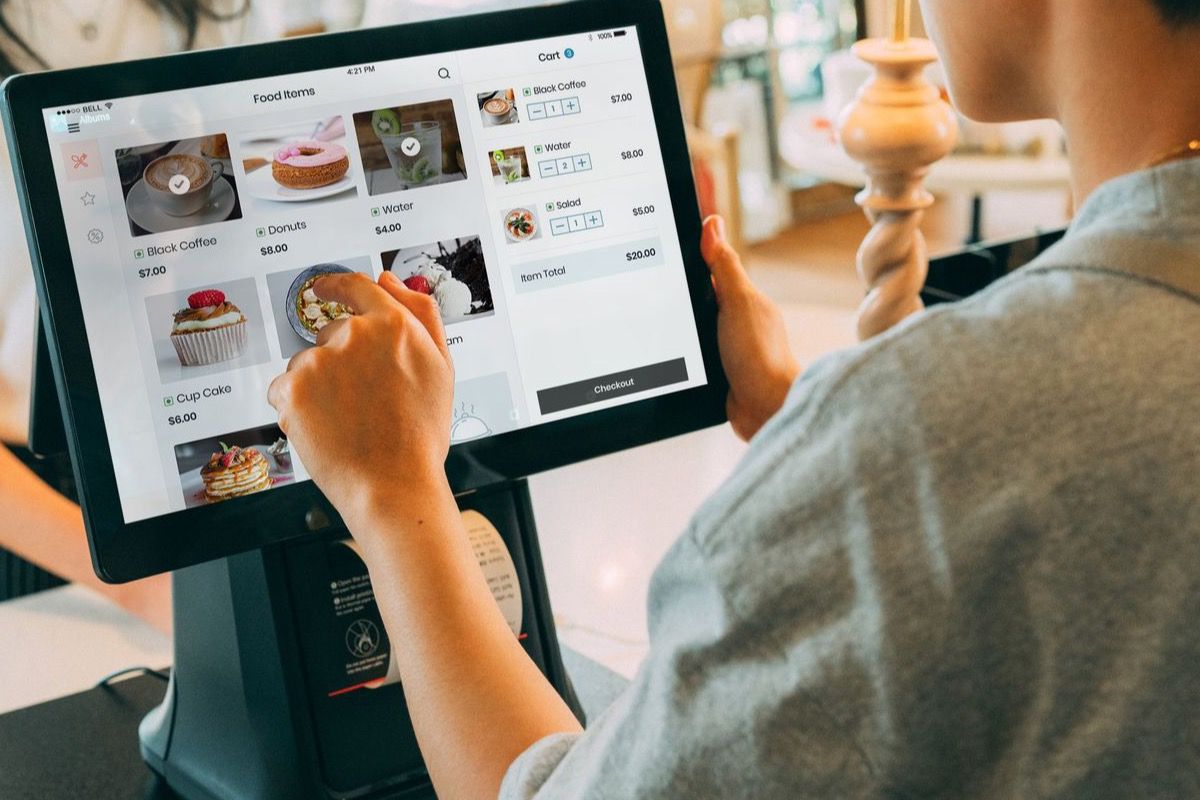
QRfood takes a different bet: decouple your restaurant software from your hardware. Use any device you already own — a tablet, an old phone, a laptop. Switch locations without renegotiating contracts. Add QR ordering without touching your existing POS setup.
We're not trying to replace your entire POS. We complement what you already have — with transparent pricing and zero hardware lock-in. If your Clover terminal works fine for taking payments, keep it. Add a QR menu layer that turns every table into a self-ordering station, every menu change into a two-minute edit, and every location into a copy of the last one.
The pitch is simple: your hardware should be a tool, not a trap. Your contract should be readable, not a treasure hunt. And your menu should be as flexible as your kitchen actually is.
The question worth asking
Next time you're standing at your counter, look at the terminal and ask yourself: am I paying for the convenience — or am I paying for the lock-in?
The best operators I talk to aren't the ones with the most expensive hardware. They're the ones who kept their options open. QRfood is built for exactly that.
Already have a POS but need better QR ordering? QRfood works alongside it. Try free at qrfood.ai.