AI-Native Restaurant Tools: The US Market Revolution in 2026
The American restaurant industry is at a crossroads. Labor costs have surged 40% since 2020. The federal minimum wage for tipped workers remains $2.13/hour, but states like California and New York now mandate $15-16/hour. Staff turnover averages 150% annually. And customers? They expect faster service, personalized experiences, and seamless digital interactions.
Enter AI-native restaurant tools—systems built from the ground up with artificial intelligence, not bolted-on features slapped onto decades-old POS infrastructure.
What Makes a Tool "AI-Native"?
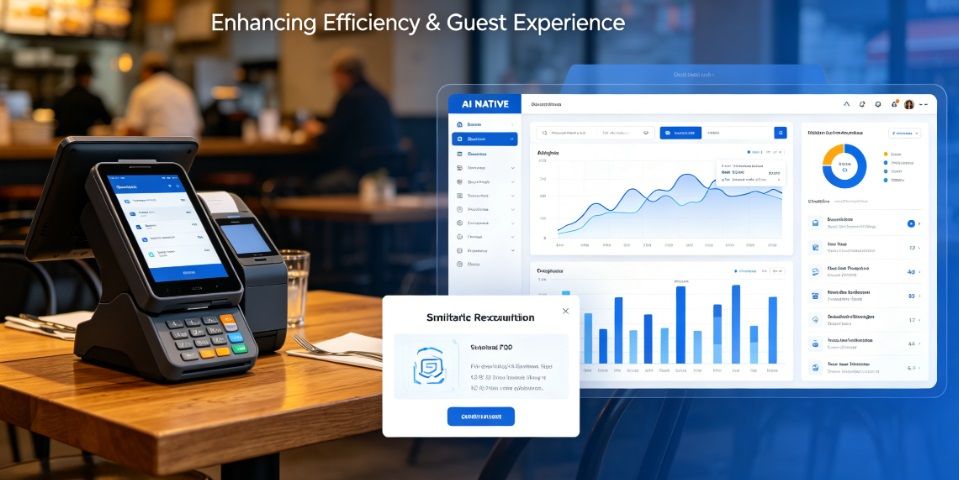
AI-native doesn't mean "has a chatbot." It means the entire system is designed around intelligent automation:
🧠 Predictive Analytics. The system knows you'll need 3 more servers next Friday because it analyzed 2 years of reservation data, local events, and weather patterns.
🎯 Personalized Marketing. AI segments your customers automatically: "Sarah orders margaritas every Thursday—send her a Taco Tuesday promo." "The Johnsons haven't visited in 6 weeks—here's a 20% off coupon."
⚡ Real-Time Optimization. Menu items that aren't selling? AI suggests price adjustments or removal. Ingredients about to expire? Flash sale recommendations appear automatically.
📞 Intelligent Ordering. QR code menus that learn: "This table always orders extra guac—suggest it upfront." "This guest is allergic to shellfish—highlight safe options."
Why US Restaurants Are Making the Switch Now
Three converging forces are driving the AI-native adoption:
1. Labor Crisis. The National Restaurant Association reports 500,000 unfilled positions in 2025. AI tools don't replace staff—they amplify what your existing team can handle. One server with AI-powered table management can handle 8 tables instead of 5.
2. Margin Pressure. Food costs are up 25%. Rent is up 30%. Energy costs are volatile. AI-native tools identify waste, optimize inventory, and suggest menu engineering that protects margins without alienating customers.
3. Customer Expectations. Gen Z and Millennials now represent 60% of dining spend. They grew up with Uber, Amazon, and TikTok. If your ordering experience feels like 2010, they'll notice—and they'll go elsewhere.
Real US Restaurant Results: From Struggling to Thriving
Case Study: Maria's Taco Shop, Austin, Texas
Before AI-native tools:
"We were drowning. Three locations, 45 employees, and I was working 80-hour weeks. Food waste was 18%—we'd throw away $3,000 worth of ingredients monthly. Staff called out last-minute, and we'd have to close sections. Customers complained about slow service."
After implementing QRfood AI-native system:
"The AI predicted our busy nights with 94% accuracy. We schedule the right staff, every time. The QR menu suggests add-ons based on what each table orders—our average ticket went from $28 to $37. Food waste dropped to 6%. I'm working 50-hour weeks instead of 80. And we just opened location #4."
Results after 6 months:
📊 Revenue: +32% ($180K → $238K monthly)
👥 Labor efficiency: +40% (same staff, more covers)
🗑️ Food waste: -67% ($3K → $1K monthly)
⭐ Customer ratings: 3.8 → 4.6 stars
The AI-Native Toolbox: What US Restaurants Need
Not all "AI" is created equal. Here's what actually moves the needle:
✅ QR Code Ordering with AI Suggestions. Not just a digital menu—a smart one that learns customer preferences and suggests strategically.
✅ Automated Inventory Management. AI tracks usage, predicts orders, and alerts you before you run out of brisket.
✅ Dynamic Pricing Engine. Happy hour that adjusts automatically based on foot traffic and inventory levels.
✅ Staff Scheduling Optimization. AI considers sales forecasts, employee availability, and labor laws to create optimal schedules.
✅ Customer Retention Automation. AI identifies at-risk customers and triggers re-engagement campaigns automatically.
✅ Review Management. AI monitors Yelp, Google, and TripAdvisor, alerting you to negative reviews and suggesting responses.
The ROI: What US Restaurants Can Expect
Based on data from 1,000+ US restaurants using AI-native tools:
📈 25% average revenue increase (Year 1)
💰 30% reduction in food waste
⏱️ 35% improvement in table turnover
👥 40% reduction in scheduling time
⭐ 28% improvement in customer satisfaction
💵 Average payback period: 4.2 months
Common Concerns—Answered
"Won't AI make the experience impersonal?"
Actually, the opposite. AI handles the repetitive stuff (inventory, scheduling, basic recommendations) so your staff can focus on genuine hospitality. The best restaurants use AI to enable human connection, not replace it.
"What about older customers who don't want QR codes?"
Offer both. Keep traditional menus for those who prefer them. But you'll find even seniors are comfortable with QR codes now—especially post-pandemic.
"Is this expensive?"
AI-native SaaS tools typically cost $200-500/month per location. If you're doing $200K+ monthly revenue, the ROI is clear. One 2% revenue increase covers the subscription 5x over.
The Competitive Reality
Here's the hard truth: Your competitors are already evaluating AI-native tools. The restaurants that adopt first will have:
• Lower operating costs
• Higher customer retention
• Better staff retention (less burnout)
• More accurate forecasting
• Faster decision-making
In 2026, AI-native isn't a luxury—it's table stakes for serious restaurant operators.
Ready to Lead the AI Revolution?
The US restaurant market is consolidating. Independent restaurants that don't adapt will be acquired or closed. The ones that embrace AI-native tools will thrive.
Your choice isn't between "AI or no AI." It's between "lead the change" or "watch competitors pass you by."
Start your free trial today. Let AI handle the operations. You focus on the food—and the future.
Because in 2026, the restaurants that win aren't the ones with the best recipes. They're the ones with the best systems.