Restaurant Marketing on a Budget: 10 Low-Cost Strategies That Actually Work
"I don't have a marketing budget."
I hear this every week from restaurant owners. And I understand. When you're paying rent, sourcing ingredients, covering payroll, and hoping the AC doesn't break in July — spending money on "marketing" feels like lighting cash on fire.
But here's what I've learned from working with hundreds of restaurants: the ones that grow aren't the ones with the biggest marketing budgets. They're the ones with the smartest strategies.
I've seen a food truck in Austin grow 300% in six months without spending a dollar on ads. I've watched a family diner in Cleveland double their dinner rush using nothing but a Google Business profile and a QR code.
The secret isn't money. It's knowing where to put your energy.
Here are 10 restaurant marketing strategies that cost little to nothing — and deliver real results.
Strategy 1: Optimize Your Google Business Profile
This is the single highest-ROI marketing move a restaurant can make. And it's completely free.
Your Google Business Profile is the first thing customers see when they search for your restaurant. A complete, well-maintained profile can increase visits by 30% or more.
Quick wins:
• Upload at least 20 high-quality photos (food, interior, exterior, team). Restaurants with photos get 42% more direction requests.
• Update your hours, phone number, and address — and keep them current.
• Respond to every single review (good and bad). This signals to Google that you're engaged.
• Post weekly updates: daily specials, events, new menu items. Google Posts show up right in search results.
• Add your menu. Google now lets you upload your menu directly. Restaurants with menus on Google get 4x more clicks.
Strategy 2: Leverage User-Generated Content
Your customers are your best marketing team. Every time someone snaps a photo of your food and posts it online, that's free advertising.
How to encourage it:
• Create an Instagram-worthy presentation. It doesn't have to be fancy — a clean plate, good lighting, and a garnish go further than you think.
• Add a hashtag to your menu, table tents, and receipts. Keep it simple: #YourRestaurantName.
• Repost customer photos on your own social channels. People love seeing their content shared.
• Run a monthly photo contest. Best food photo wins a free meal. Cost: one meal. Value: dozens of high-quality photos you didn't pay for.
Strategy 3: Build an Email List
Email marketing has a $36 ROI for every $1 spent. For restaurants, it's even higher because your customers already know and love your food.
Start simple:
• Put a sign-up sheet at the register. Offer a 10% discount on their next visit for signing up.
• Add an email sign-up option to your digital menu footer. QRfood makes this easy.
• Send a weekly email: "This week's specials" + one interesting story or behind-the-scenes photo. Keep it short.
• Send a birthday email with a free dessert. It costs you $2 and generates a $35 visit.
A list of 500 engaged email subscribers can drive more repeat business than a $5,000 Facebook ad campaign.
Strategy 4: Partner with Local Businesses
Cross-promotion is one of the most underused marketing strategies in the restaurant industry.
Ideas that work:
• Coffee shop partnership: their customers get 10% off at your restaurant with a receipt from theirs.
• Gym partnership: post-workout protein bowls or smoothies with a discount for gym members.
• Office lunch program: deliver to nearby offices at a group discount.
• Hotel partnership: leave your menus (or QR code cards) at the front desk of nearby hotels.
• Event venue referral: local event venues refer catering clients to you.
Cost: a few conversations and a stack of business cards.
Strategy 5: Run a Simple Referral Program
Word-of-mouth is the most trusted form of advertising. Make it easy for your customers to do it.
The simplest version: "Bring a friend, you both get 15% off." Print it on the back of receipts. Add it to your digital menu's order confirmation page.
Better version with QRfood's digital menu: Include a shareable referral link in the digital receipt. Customer texts it to a friend. Friend gets a discount. Customer gets loyalty points. You get a new customer for pennies.
A referral customer is worth 25% more than a customer acquired through paid advertising. They stay longer, order more, and refer others.
Strategy 6: Master Social Media Without Spending a Dime
You don't need a social media manager or a content budget. You need consistency and authenticity.
The 4-posts-per-week formula:
• Monday: Behind-the-scenes (staff prep, kitchen action, delivery receiving).
• Wednesday: Food highlight (close-up of your best dish, properly lit).
• Friday: Customer spotlight (repost a customer photo or tag someone).
• Sunday: Weekly specials or upcoming events.
Platforms that work best for restaurants:
• Instagram — visual, high engagement, perfect for food photos
• TikTok — short video clips of cooking, plating, and customer reactions
• Facebook — local community groups and event promotion
• Google Business Profile — local search visibility (see Strategy 1)
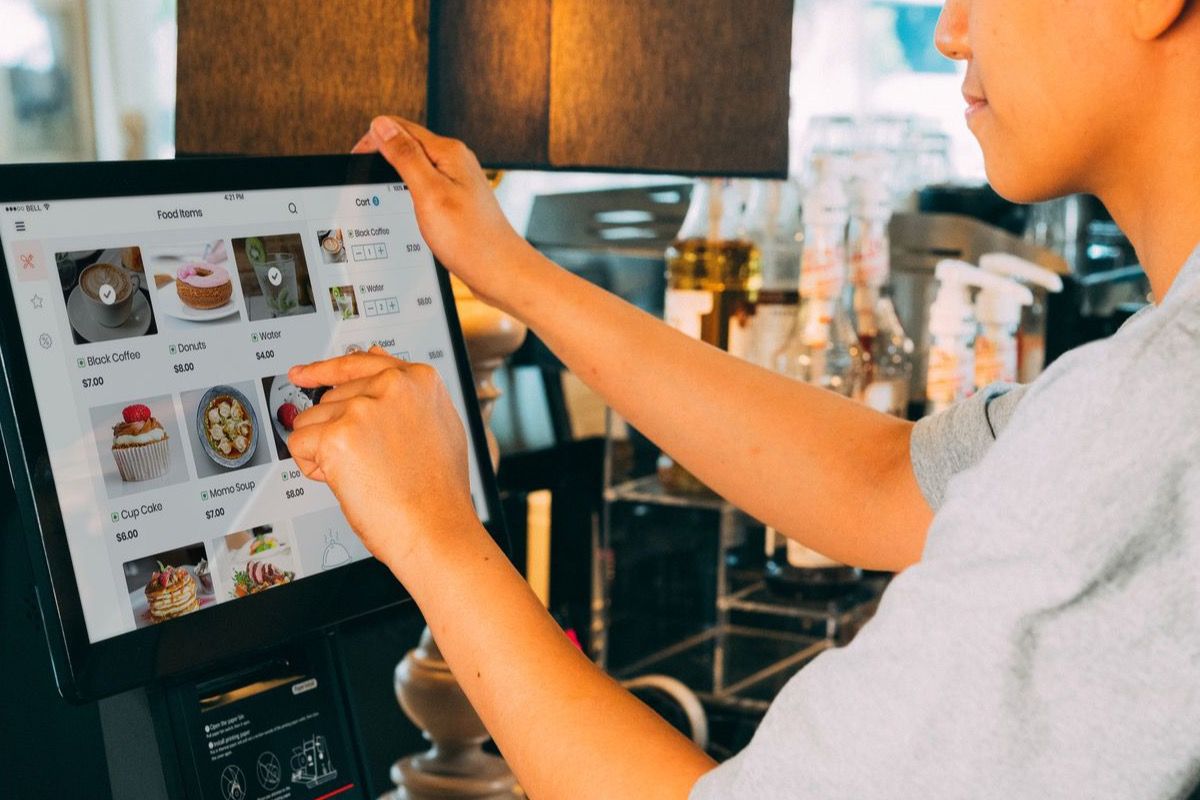
Strategy 7: Use Your Digital Menu as a Marketing Tool
Your digital menu isn't just an ordering tool. It's a marketing channel you're already paying for — so use it.
Marketing features built into a digital menu:
• Banner announcements. Promote daily specials, events, or holiday hours right at the top of your menu.
• "Chef's Pick" or "Most Popular" tags. Guide customers toward your highest-margin items.
• Upsell prompts. "Add a drink for $2" or "Make it a combo" appear automatically during checkout.
• Social media links. Embed your Instagram feed or TikTok profile in the menu footer.
• Review requests. After payment, prompt customers to leave a Google review. One click.
• Push notifications (if enabled). Alert regular customers about specials or new menu items.
Restaurants using QRfood's digital menu see an average 18% increase in add-on sales — that's $900/month for a $5,000/month restaurant. No extra marketing spend.
Strategy 8: Host Themed Nights or Events
Themed nights are the oldest trick in the restaurant marketing book — because they work. They create urgency, build community, and give customers a reason to come back.
Low-cost ideas:
• Trivia night — cost: a microphone and a prize (free appetizer). Draws 20-40 extra customers on a slow Tuesday.
• Taco Tuesday / Wing Wednesday / Pasta Thursday — simple, predictable, shareable.
• Local artist showcase — hang art on your walls, promote the artist, host an opening night. Cost: wall space.
• Live music — one acoustic guitarist or a jazz duo on a Friday evening. Cost: $100-200. Return: $800-1,200 in extra sales.
• Kids-eat-free night (with adult purchase) — huge family draw on quiet weeknights.
Strategy 9: Collect and Showcase Reviews
Social proof is the most powerful marketing force for restaurants. A 4.5-star rating with 200 reviews will outperform any ad campaign.
How to collect reviews without begging:
• Add a review QR code to your table tents, digital menu footer, and takeout bags.
• Train staff to ask at the right moment — after a compliment: "Glad you enjoyed it! If you have a moment, we'd love a Google review."
• Send a follow-up text 2 hours after dining (QRfood's system can automate this).
• Feature your best reviews on your digital menu and social media.
• Don't buy fake reviews. Google and Yelp are getting better at detecting them, and the penalty can destroy your presence.
Strategy 10: Create a Simple Loyalty Program
It costs 5x more to acquire a new customer than to retain an existing one. A loyalty program is your retention engine.
You don't need a fancy app. The simplest loyalty programs work best:
• Punch card: 10 punches = 1 free meal. Cost: printed card + free meal (cost price, not retail).
• Digital stamp: QRfood's built-in loyalty tracks visits automatically. Every 5th visit gets a free appetizer or drink.
• Points system: 1 point per dollar spent. 100 points = $10 off. Simple. Transparent. Effective.
• VIP tier: customers who visit 10+ times/month get early access to new menu items or a special tasting.
The average loyalty program member spends 20% more per visit and visits 30% more often. That's a 56% increase in lifetime value — from a punch card.
Real Story: How Maria's Taqueria Grew 40% Without Spending on Ads
Maria runs a small taqueria in Denver. Five tables, a counter, and a reputation for the best al pastor in the neighborhood. When we first met, she told me: "I can't afford marketing. I can barely afford rent."
We didn't create a $10,000 campaign. We did three things:
1. We optimized her Google Business Profile — added photos, updated her menu, started responding to every review.
2. We added a QR code to every table directing customers to her digital menu. The footer included a "Share with a friend" link and a review prompt.
3. We started a simple "Taco Tuesday" email blast to her list of 120 subscribers.
Six months later:
• Google impressions: up 340%
• Email list: 120 to 780 subscribers
• Taco Tuesday revenue: 2.5x average weekday
• Overall revenue: up 40%
Total spent: $0.
Maria's story isn't unique. I've seen this play out in diners, food trucks, pizzerias, and fine-casual restaurants across the country. The formula is the same: smart fundamentals + consistency + leveraging the tools you already have.
The $0 Marketing Checklist
Print this. Put it in your office. Check one item each week:
[ ] Upload 5 new photos to your Google Business Profile
[ ] Respond to all new reviews from the past week
[ ] Post 4 times on social media (Monday/Wednesday/Friday/Sunday)
[ ] Send one email to your list
[ ] Ask 3 customers for a Google review
[ ] Update your digital menu with this week's specials
[ ] Post a weekly special on Google Business Profile
[ ] Repost one customer photo on your social channels
[ ] Reach out to one potential local partner
[ ] Check your reviews and fix one recurring complaint
Marketing Doesn't Have to Be Expensive
The restaurant businesses that grow are the ones that market consistently, not the ones that market expensively.
You don't need a billboard. You don't need a TV ad. You need: great food, a reason for people to talk about it, and a system that makes it easy for them to do so.
Start with one strategy from this list. Do it consistently for 30 days. Then add another. The compounding effect of small, consistent marketing efforts will surprise you.
And if you want one tool that helps with half of these strategies — reviews, email capture, loyalty, upselling, social sharing — take a look at QRfood's digital menu and ordering system. It's built to do the marketing work while you focus on the cooking.