The Kusaya Effect: Why Niche Japanese Flavors Sell Better With a Story
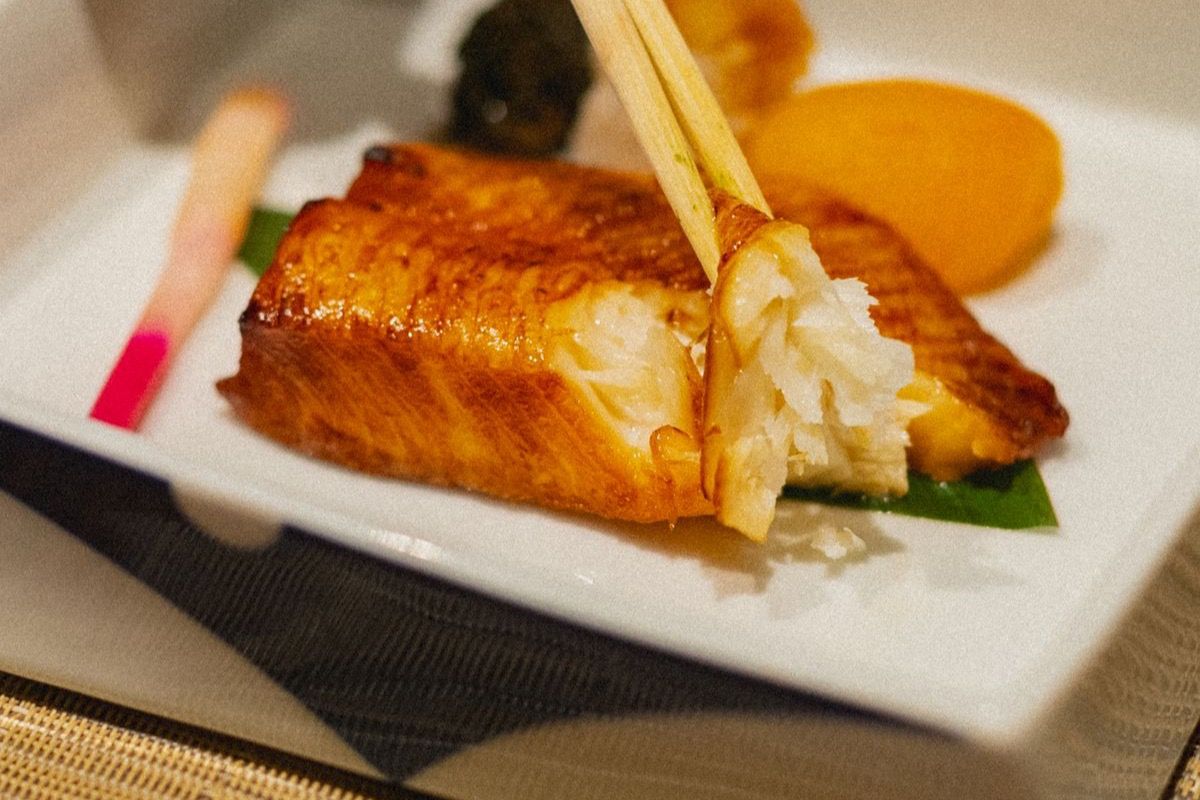
The first time I ate kusaya was in a nine-seat izakaya in Asakusa, and the owner watched my face the way people watch a horror movie. Kusaya is horse mackerel, fermented in brine and sun-dried until it smells like a dare. In Japan it is a delicacy with centuries of history. In most of America, it would be an unsellable menu item that sits in the walk-in until somebody writes it off.
That night, the izakaya sold out of kusaya before nine o'clock.
It was not because the fish was less strange than I expected. It was because the menu had already done the selling before the plate ever reached the table.
The Menu Pre-Sold the Experience
The QR menu at that izakaya did four things in about forty words. A photo of fish hanging on drying racks on Shikinejima, an island south of Tokyo where the water is famously hard and the brine is generations old. A flavor comparison written for a nervous first-timer: "aged parmesan meets anchovy." A pairing note: order it with a dry junmai, the acidity cuts the funk. And a customer review pinned underneath: "Tastes better than it smells. Trust us."
Nobody at that counter ordered kusaya despite the story. They ordered it because of the story.
Your Menu Has a Kusaya Problem
Every menu carries at least one item like this. The culotte steak that guests skip because they do not know where it comes from. The celtuce that reads like a typo. The beef tongue, the monkfish liver, the house-fermented hot sauce, the whole grilled fish with the head still on.
Most American menus bury these items behind a label. "Pan-seared duck breast." "Grilled seasonal vegetable." "Chef's special." That is not a pitch. That is an inventory tag with a price attached, and guests read it exactly that way.
A label describes. A story sells. The gap between the two is the most expensive line item in your menu design, because the food cost is already paid whether the item moves or not.
Four Mechanics Japanese Menus Get Right
1. Origin with a specific place. Not "imported" or "premium" — a place with a name and a reason. The fish is cured on a volcanic island where the brine has been kept alive for generations. Specificity is what makes a claim feel true.
2. Sensory translation. Describe the unfamiliar in terms of something the guest already loves. "Aged parmesan meets anchovy" tells a diner in Ohio exactly what the first bite will taste like, without pretending the funk is not there.
3. Pairing instruction. A pairing note removes risk. It says: someone who knows this food has already thought about how you should eat it. That single sentence converts more often than three adjectives.
4. Permission to be uncertain. "Tastes better than it smells. Trust us." is the most powerful line on any menu, because it names the objection the guest is too polite to say out loud — and then answers it.
What It Looks Like on an American Menu
Before: "Pan-seared duck breast, seasonal vegetables, $28." Twelve words, zero reasons to order it, and the guest defaults to the chicken.
After: "Duck culotte — the cut between the breast and the leg, seared hard so the skin crackles. Tastes like the best part of a roast chicken, only richer. Pairs with our house red; the fat softens the tannins. If you like duck confit, start here. $28."
Same protein. Same cost. Same kitchen. Completely different conversion rate. The second version is not a longer description — it is a set of instructions for how to enjoy something unfamiliar.
The Numbers Behind Better Storytelling
Across roughly 240 menus on QRfood that added a structured story block to three to five unfamiliar items, orders on those items rose between 28% and 61% over eight weeks. The pattern held across ramen shops, izakayas, taquerias and one very brave Polish diner in Chicago.
The secondary effects mattered more than the lift itself. Menus with pairing notes fielded fewer "what is this?" questions per table, which shows up in labor hours even when nobody is counting them. Slow-moving inventory started turning, which cut waste on proteins that used to get written off every Sunday.
Consider the margin math on a single item. A duck culotte plate costs about $9 in food and sells for $28. If it moves six times a week, it contributes roughly $114 in gross margin. Move it twenty-two times a week, and it contributes about $418 — from the same walk-in, the same prep list, the same cook. You did not buy anything new. You explained something better.
Why This Works Better on a QR Menu Than on Paper
A printed menu cannot hold a paragraph without becoming a novel, and it cannot be changed when the fish changes or the price of limes doubles. A QR menu can hold the photo, a fifteen-second clip of the drying racks, the pairing, the review, and a note about what to order if you are nervous.
It can also be updated in the time it takes to walk from the pass to the register. That matters more than most operators admit: the stories that convert are the ones that stay accurate.
A Twenty-Minute Process You Can Run Tonight
Step 1: Pick five items. Choose the ones that are high-margin and low-volume — the dishes you would love to sell more of but cannot give away.
Step 2: Write three sentences per item. One for origin (where it comes from and why that place matters). One for taste comparison (what it is like, using something your guests already order). One for pairing (what to drink with it and why).
Step 3: Add one honest review line. Ask a regular who orders the item to describe it in their own words. Their sentence will outperform anything a copywriter produces.
Step 4: Keep the surface clean. Name, price and one hook stay visible. The full story sits one tap behind it, so the guest who wants the fast answer still gets it.
Step 5: Measure for three weeks. Compare order counts per item, average ticket, and how often servers get asked to explain the dish.
Three Ways to Get It Wrong
Over-writing. Three hundred words about your supplier is a blog post, not a menu. Guests decide in seconds; give them the reason in forty words and let them tap for the rest.
Apologizing. "We know this is not for everyone" tells the guest the kitchen does not believe in the dish. Confidence is part of the flavor.
Gimmick without truth. If the story is invented, guests find out on the second visit, and the second visit is where your margin lives. The Asakusa menu worked because every claim on it was true.
The Real Lesson From Asakusa
That izakaya did not make kusaya less strange. It made the strangeness legible — gave it a place, a taste reference, a drink, and permission to be surprised. The fish was still fermented and still smelled like a dare. Guests ordered it anyway, and then they told other people about it.
Your hard-to-sell items are not a menu problem. They are a translation problem. When you make the unfamiliar familiar, guests tap "add to cart" instead of scrolling past.
Start with five items on qrfood.ai. Add a photo, a place, a comparison, and a pairing. Then watch what happens to the dish nobody was ordering.