Why Table Turnover Matters More Than You Think
Every minute a table sits empty is money you're leaving on the floor. For a typical restaurant, increasing table turnover by just one turn per night can add $100,000+ to annual revenue.
The problem? Most owners think the only way to turn tables faster is to hire more staff. Wrong. With the right systems and technology, you can serve more guests per night without adding a single person to payroll.
Here are 5 proven strategies to make it happen.
1. Streamline Your Menu Design
Your menu is the most powerful tool you're not using. A well-designed menu does more than sell food — it reduces decision time, which directly impacts table turnover.
The psychology is simple: when customers can find what they want quickly, they order faster. When they order faster, the kitchen gets the order sooner. And when the kitchen gets the order sooner, tables turn faster.
Here is what to do:
• Cut the clutter. Reduce your menu to 6–8 items per category. Too many choices lead to "decision paralysis" — customers spend 40% more time deciding when faced with 15+ options.
• Use visual hierarchy. Place your most profitable items in the "sweet spot" — the top-right corner of each section. That is where the eye naturally lands.
• Add high-quality photos. Digital menus with photos see 30% faster ordering times. Customers can visualize what they want without reading through descriptions.
• Group by speed. Organize your menu so that items that take the same time to prepare are grouped. This helps the kitchen batch-prep more efficiently.
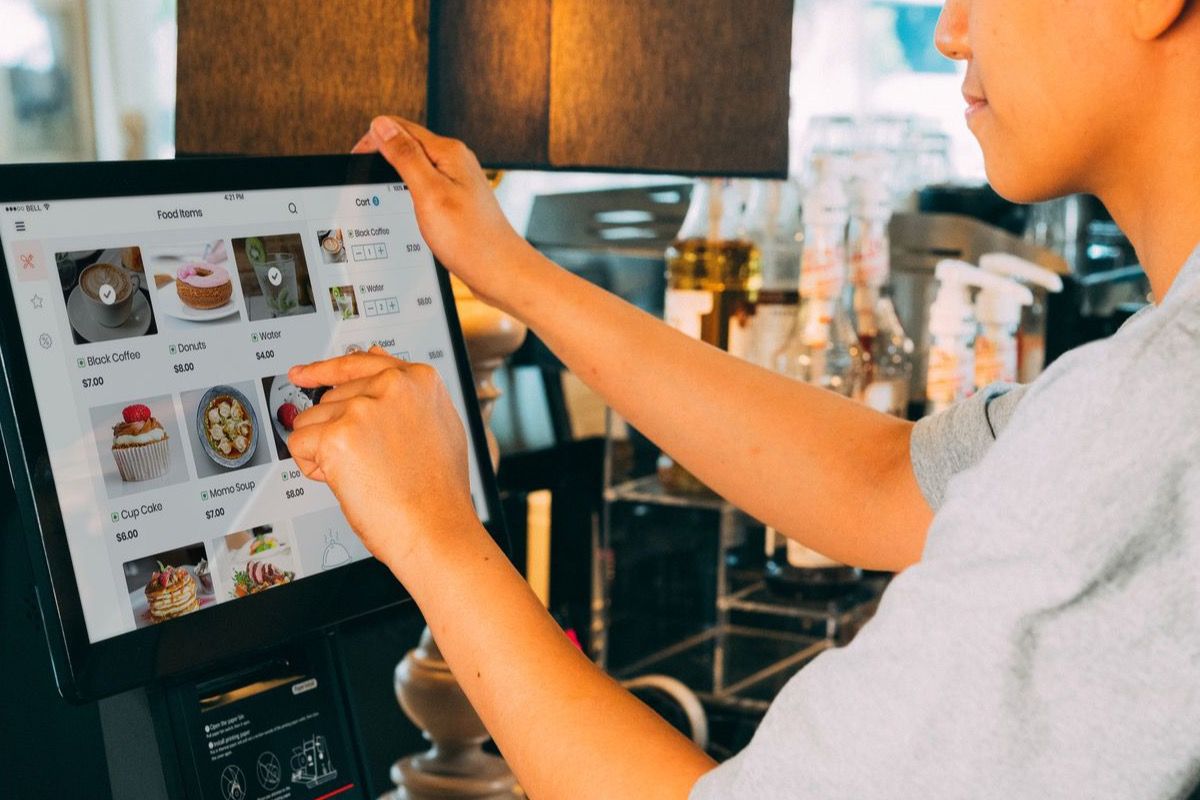
With a digital menu platform like QRFood, you can A/B test different menu layouts to see which one converts fastest. No printing costs, no wasted paper.
2. Implement QR Code Ordering at Every Table
This is the single biggest lever for table turnover. QR code ordering eliminates the two biggest bottlenecks in the dining experience: waiting for the server to take the order, and waiting for the check.
Here is the data from restaurants that have made the switch:
• Time to order: 2 minutes vs 6–8 minutes with a server (70% faster)
• Time to pay: 30 seconds vs 4–5 minutes waiting for the check
• Table turn time: 12–15 minutes saved per table on average
• Tips: 15–20% higher on digital payments (customers tip more on screens)
The key is making QR ordering frictionless. Use a platform that:
• Requires no app download (web-based QR menus have 90%+ adoption rates)
• Supports multiple languages for diverse customer bases
• Integrates with your existing POS system
• Allows real-time menu updates without IT support
Pro tip: Place QR codes in a visible spot on every table, plus at the entrance for guests waiting. And make sure the first page loads in under 2 seconds — speed matters.
3. Rethink Your Kitchen Layout and Prep Work
The kitchen is often the bottleneck, not the dining room. Even if you turn tables fast, if the kitchen cannot keep up, guests wait longer and satisfaction drops.
Three kitchen optimizations that directly impact table turnover:
1. Prepped ingredients by station. Arrange your mise en place so each station has everything within arm reach. A well-organized prep station saves 30–60 minutes of total cook time per shift.
2. Parallel plating stations. Instead of one person plating all dishes, set up multiple plating stations for high-volume items. This is how busy diners push out 200+ covers per hour.
3. Dedicated expo position. One person calling orders and coordinating pickups can eliminate 50% of kitchen-dining room friction. They keep the pace, manage priorities, and reduce wait times.
The digital ordering system feeds directly into this: when orders come in through QR, they go straight to the kitchen display system (KDS). No handwritten tickets, no miscommunications, no lost orders.
4. Optimize the Payment Experience
The average diner spends 4–7 minutes waiting to pay. That is 4–7 minutes of table real estate generating zero revenue. Multiply that by 20 tables and 2 turns, and you are losing 2–3 hours of potential seating per night.
Speed up payment with these tactics:
• Digital payments integrated with QR ordering. Customers pay when they are ready, not when the server finds time to bring the machine.
• Split bill made easy. Group dining should not mean 15 minutes of calculator work for your staff. A good digital system handles splits instantly.
• Auto-gratuity for large parties. Standard practice for parties of 6+, and it eliminates the "should I tip" hesitation that slows down payment.
• Prompt for tips with suggested percentages. Customers presented with 15%, 20%, and 25% options tip more and pay faster than when they are asked "how much?"
• Table-side mobile payment. Equipping servers with handheld payment devices (like Toast Go or Square Terminal) eliminates trips to the POS station.
5. Use Data to Predict and Prep
The most efficient restaurants run on data, not intuition. Your POS and digital ordering system collect a goldmine of information that can help you prep smarter and serve faster.
Track these metrics religiously:
• Peak hours by day of week — staff accordingly, not just "Friday is busy" but "Friday 6–8 PM is peak"
• Average cook time per dish — know which items slow down the kitchen and consider moving them to a limited-time section
• Dish popularity by season — prep ingredients for your top 10 sellers and limit availability for slow movers
• Table turn time trends — if certain tables consistently take longer, investigate why (location? server assignment? table size?)
• Customer wait time vs satisfaction correlation — find the sweet spot where speed meets quality
The beauty of QR ordering is that every order feeds data back into the system automatically. Over time, your predictions get sharper, your prep gets more precise, and your tables turn faster.
Putting It All Together
Let us look at the math for a 30-table restaurant:
Current: 30 tables × 1.5 turns × $50 average check = $2,250 per night × 30 days = $67,500/month
With QR ordering + optimized operations: 30 tables × 2.0 turns × $60 average check (15% higher due to digital upselling) = $3,600/night × 30 days = $108,000/month
That is an additional $40,500/month — or $486,000/year — without hiring a single person.
The key is starting with the highest-impact change (digital ordering) and layering in the operational optimizations over time. You do not need to do all 5 at once. Pick one, implement it well, measure the results, and move to the next.
Ready to start turning tables faster? QRFood's digital menu platform makes it easy to implement QR ordering, analyze performance data, and optimize your operations — all from a single dashboard.